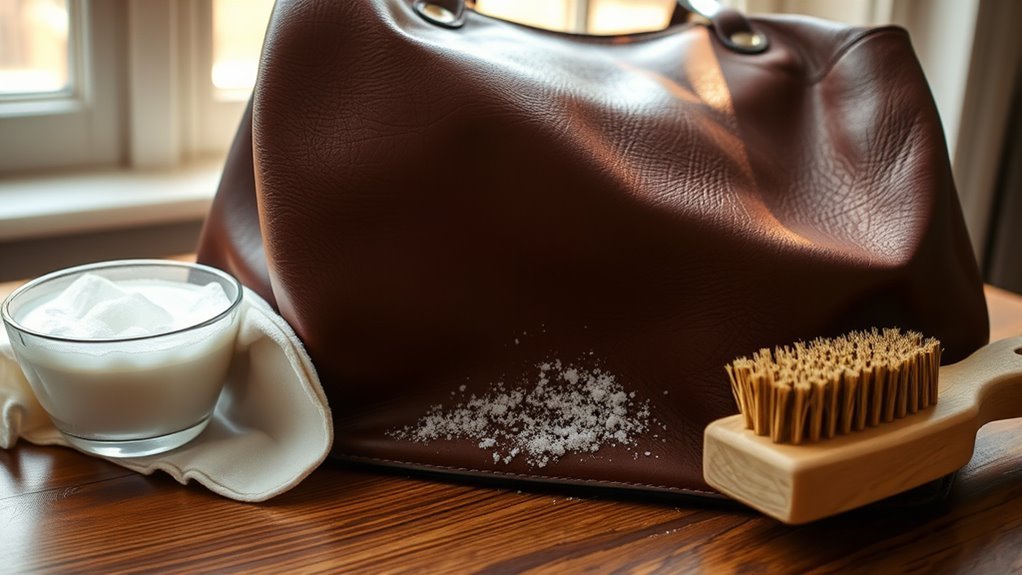
Salt stains on a leather bag are the white lines left when slush or salty water dries. Most come out at home. Wipe the whole panel with a cloth dampened in cool water, let it dry slowly and condition the leather. For marks that return, use a leather cleaner or a salt stain remover made for leather. Treat suede differently: let it dry, then brush.
How to Remove Salt Stains From Leather Bags
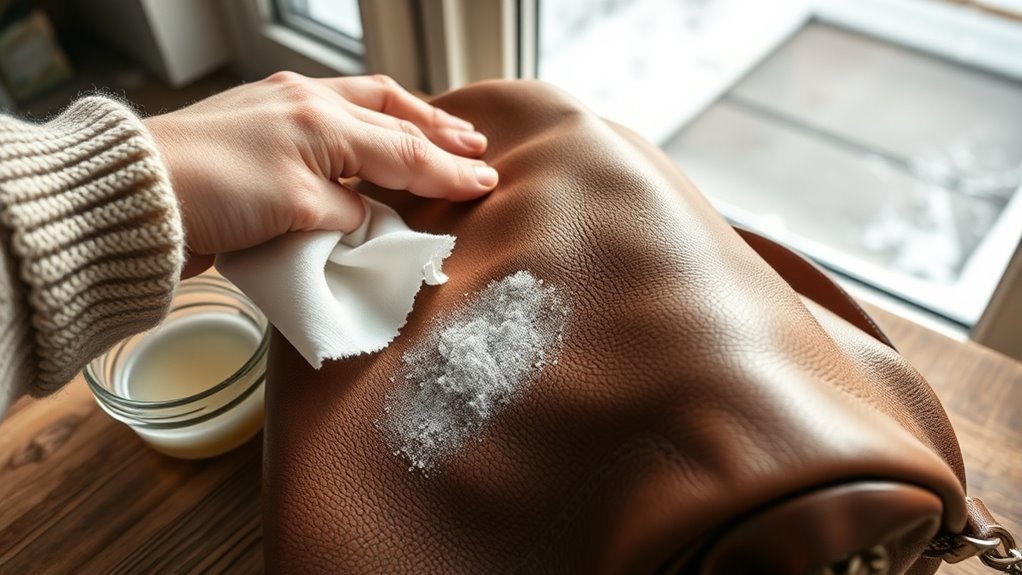
Act soon. Salt keeps pulling moisture out of leather for as long as it stays there. Start by wiping the marked area with a soft cloth or sponge dampened in cool water. Salt dissolves in water, so plain water is the first tool.
Wipe the whole panel from seam to seam, not just the white line. An evenly damp surface dries without a new ring. Do not soak the leather. Then blot with a dry towel and let the bag dry at room temperature, away from heaters.
If the white line comes back as the leather dries, repeat the wipe. Salt deep in the leather moves to the surface as water evaporates, so two or three light rounds work better than one heavy one. For stubborn marks, use a leather cleaner or a salt stain remover made for leather and follow the label.
Many guides suggest white vinegar mixed with water. It can dissolve salt, but vinegar is acidic and can dull or dry some finishes. If you try it, use a weak mix on finished leather only, test it on a hidden spot and wipe it off with a damp cloth.
When the bag is fully dry, apply a leather conditioner. It replaces the oils that salt and water removed and helps prevent cracking.
If your bag is suede or nubuck, skip the wet wipe. Let the marks dry fully, then lift the salt with a suede brush, using short strokes in one direction. A suede eraser helps with what remains. Take heavy staining to a specialist.
Test any cleaner or conditioner on a hidden area first, such as the base or the inside of a strap. Check that no color comes off on the cloth before you treat the visible panel.
What Causes Salt Stains on Leather Bags?
Salt stains appear when salty water soaks into leather and then dries. As the water evaporates, the dissolved salt moves to the surface and forms a white, crusty line at the edge of the wet area. Salt also draws moisture and oils out of the leather, which leaves it stiff. These are the main sources in winter:
- Road Salt: De-icing chemicals are often spread on roads in urban areas.
- Melting Snow: As snow melts and refreezes, it can splash salt onto your leather surfaces, creating unsightly stains.
- High Salting Areas: Urban environments often experience heavy salting, increasing the chances of encountering stains on leather bags.
- Leather Types: Different leather types, especially suede, are more susceptible to damage from salt, leading to dehydration and cracking.
Bags pick up salt in less obvious ways too. A tote set on a wet car floor, a train platform or a slushy step soaks it up through the base. Wet coat sleeves and gloves can also carry salty water onto handles.
Prevent Salt Stains Before Winter
A little preparation before winter saves a lot of cleaning. Apply a water and stain repellent made for leather, and reapply it as the label directs. It will not make a bag waterproof, but it slows salty water from soaking in.
Condition the bag before the cold season starts. Well-conditioned leather absorbs water more slowly and is less likely to crack. On snowy days, think about carrying a nylon or coated canvas bag and saving your best leather for dry weather.
Keep the bag off wet floors and out of slush. After a wet walk, wipe it with a dry cloth as soon as you get indoors. A quick wipe removes salt before it dries into a line.
Before applying any protective product, test it on a hidden spot. Some sprays darken pale or untreated leathers.
Signs You Need Professional Help for Salt Stains
Most salt marks come out at home, but not all. If the white line keeps returning after several careful cleanings, or the leather has changed in feel, a specialist is the safer choice.
Here are the signs that it is time to stop and get help:
- Persistent Stains: If discoloration or texture changes remain, specialized cleaning may be necessary.
- Cracking: Noticeable cracks indicate dehydration that requires professional conditioning.
- Intricate Finishes: Luxury leather pieces with detailed designs are best handled by professionals to avoid further damage.
- Deterioration Signs: If untreated stains are causing deterioration, immediate professional intervention is essential.
Old salt damage gets harder to reverse with time. Leather that has dried out and cracked cannot be made whole again, only improved.
A leather specialist can clean the hide deeply, restore its oils and recolor faded areas. Ask for a quote first, since the work may cost more than a low-priced bag is worth.
Tips for Maintaining Your Leather Bag After Cleaning
After the stains are gone, a simple routine keeps them away. Condition the leather once it is fully dry, and then every 3 to 6 months. Condition more often in winter if the bag gets wet a lot.
Store the bag in a cool, dry place away from direct sunlight and radiators. Let a damp bag dry in open air before it goes into a dust bag or closet. Reapply protector spray during the season as the label directs.
Wipe the bag with a soft, dry cloth after each outing in bad weather. Pay attention to the base, corners and handles, where salty water collects. Check the bag every few weeks so new marks never have time to set.
Frequently Asked Questions
What Takes Salt Out of Leather Shoes?
The same method works. Wipe the leather with a cloth dampened in cool water, let it dry slowly away from heat and condition it. For heavy marks, use a salt stain remover made for leather shoes.
How to Polish a Leather Bag at Home?
Most leather bags need conditioner, not shoe polish. Wipe the bag clean, apply a small amount of leather conditioner and buff with a soft, dry cloth. Avoid wax shoe polish on bags, since the color can rub off onto clothes.
Does Salt Water Stain?
Yes. When salt water dries on leather, it leaves white marks and can leave a darker ring where the water stopped. Wipe the area with fresh water soon after and let it dry slowly.
Does Salt Water Damage Leather?
Yes, it can. Salt draws moisture and oils out of leather, which leaves it stiff and prone to cracking over time. Rinse the salt away with a damp cloth, then dry and condition the leather.
Conclusion
Salt stains look alarming, but most are easy to fix. Wipe the whole panel with cool water, dry it slowly and condition the leather. Brush suede dry instead of wetting it. Protect and wipe your bag through the winter, and call a specialist if marks keep coming back or the leather cracks.

