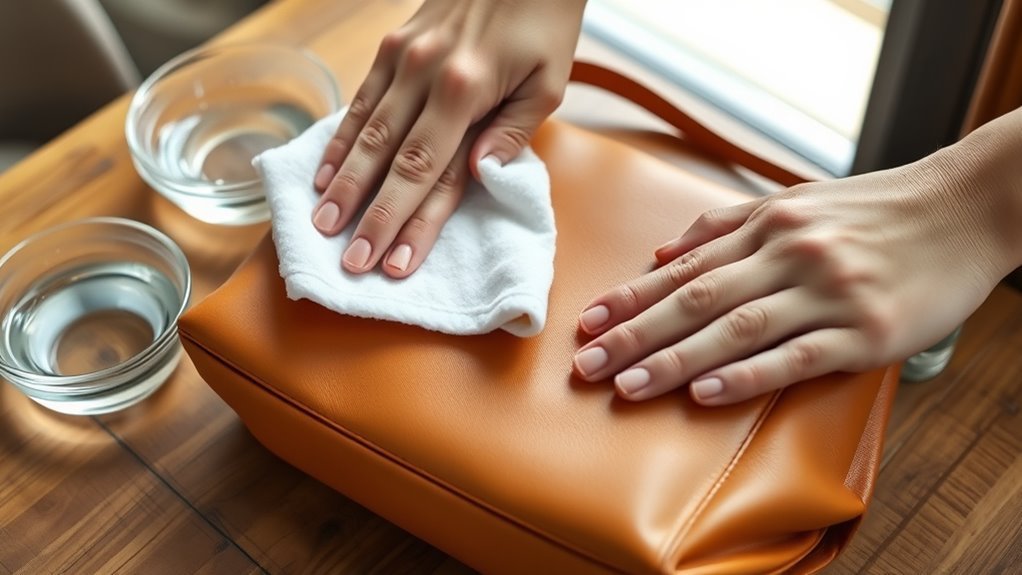
To clean your leather purse without stripping its finish, start by emptying it and inspecting for stains. Use a damp microfiber cloth with a pH-balanced leather cleaner for smooth leather, or a suede brush for suede. Tackle stains gently using baking soda for grease or rubbing alcohol for ink. After cleaning, air dry your purse in a shaded, well-ventilated area. Regular maintenance and proper techniques guarantee longevity, and there’s more to learn about keeping your purse pristine.
Why Cleaning Your Leather Purse Is Essential for Longevity
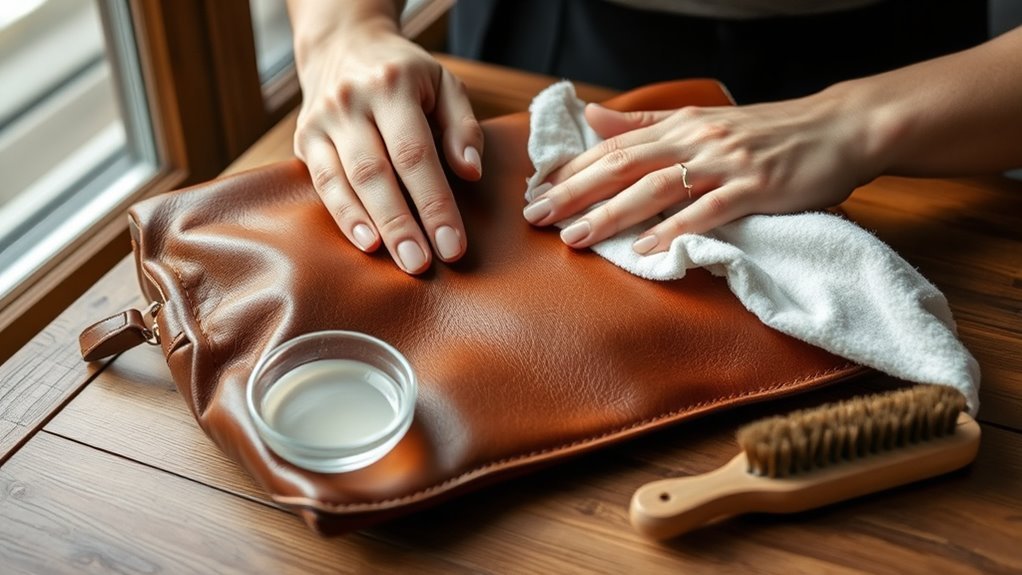
Cleaning your leather purse isn’t just a chore; it’s an essential step in ensuring its longevity. Regular cleaning prevents dirt and oils from building up, which can lead to discoloration and degradation over time.
Your leather purse naturally absorbs moisture, creating an environment for bacteria and mold growth. By maintaining a consistent cleaning routine, you mitigate these risks, protecting your investment.
Regular cleaning of your leather purse combats moisture, reducing the risk of bacteria and mold growth to protect your investment.
Proper leather care not only preserves the material’s natural oils but also its finish, preventing dryness and cracking that neglect can cause.
A well-cleaned purse not only enhances its appearance but also retains its resale value, making it a wise choice for long-term ownership.
By prioritizing moisture control and using the right products, you empower yourself to extend the lifespan of your leather purse, often allowing it to serve you beautifully for decades.
Gathering Supplies for Cleaning Your Leather Purse
Taking care of your leather purse involves preparation, and gathering the right supplies is key to effective cleaning.
Start with a damp microfiber cloth, essential for gentle cleaning without scratching the leather surface. Choose a pH-balanced leather cleaner designed to preserve the leather’s natural finish, ensuring it remains vibrant and intact, regardless of the leather type.
Next, have a soft-bristle brush ready to remove dust and debris from seams and crevices without harming the leather.
Cotton swabs are vital for precise cleaning of tight corners or intricate details, allowing you to avoid oversaturation.
Finally, don’t forget a high-quality leather conditioner, crafted from sustainable materials, to maintain suppleness after cleaning and protect the finish.
With these supplies on hand, you’re well-equipped to rejuvenate your leather purse while respecting its integrity and longevity.
Step 1: Preparing Your Purse for a Safe Clean
Before cleaning your leather purse, start by emptying it completely to remove all contents and shake out any loose debris.
Next, check the care label to identify the best cleaning method and gather essential supplies like a soft-bristle brush and a pH-balanced cleaner.
This pre-cleaning inspection guarantees you’re set up for a safe and effective clean.
Essential Cleaning Supplies
To effectively prepare your leather purse for a safe clean, start by ensuring it’s completely empty and give it a gentle shake to dislodge any loose debris. Gather essential supplies to maintain your purse’s pristine condition, considering different leather types and their specific needs. Here’s a quick reference for your cleaning essentials:
| Supply | Purpose | Cleaning Frequency |
|---|---|---|
| Microfiber Cloth | Dusting and wiping | Weekly |
| pH-Balanced Cleaner | Deep cleaning without damage | Monthly |
| Soft-Bristle Brush | Gentle scrubbing of textures | As needed |
| Leather Conditioner | Moisture and protection | Every 3 months |
| Test Patch Sample | Avoid discoloration | Before using any cleaner |
Regular maintenance keeps your purse beautiful and prolongs its life.
Purse Contents Removal
Cleaning your leather purse starts with an essential step: removing all contents.
Begin by taking out everything—wallets, makeup, and loose items. This not only guarantees a thorough cleaning but also gives you a chance to implement purse organization tips.
Shake the purse gently to dislodge any crumbs and debris. Next, use a soft brush attachment on a vacuum to carefully clean the interior, reaching into corners and seams for dust removal.
Don’t forget to check all pockets for forgotten items that could cause damage or odors.
After emptying, inspect the interior material to determine the best cleaning method.
Regular cleaning frequency recommendations suggest this process should be done every few months for ideal maintenance.
Pre-Cleaning Inspection Steps
After emptying your leather purse, it’s time to conduct a thorough pre-cleaning inspection. First, check the care label to identify the specific leather types and recommended cleaning methods.
Look for stains, damage, or signs of wear such as cracking or discoloration. These areas may need special attention or conditioning before cleaning.
Use a soft brush or microfiber cloth to gently remove dust and debris from the surface and seams. This step is essential in maintaining your purse’s integrity.
Remember, cleaning frequency impacts the leather’s condition; regular inspections can prevent long-term damage.
Finally, always test any cleaning products on an inconspicuous area to verify they won’t strip the leather’s finish or color.
Step 2: Techniques for Cleaning Different Leather Types
While each type of leather requires specific care techniques, understanding these differences guarantees your purse remains in top condition.
For smooth leather, use a damp microfiber cloth with a pH-balanced leather cleaner, applying it in small sections to avoid oversaturation. This counters cleaning myths suggesting harsher methods are necessary.
For raw leather, choose a leather-safe cleaner and gently wipe with a microfiber cloth, preserving its natural oils and finish.
When dealing with suede leather, avoid water—use a suede brush or eraser to lift dirt and stains without damaging its texture.
If your purse features a fabric lining, clean it with a damp microfiber cloth and mild soap, testing any cleaner on a hidden area first.
Remember, always allow your leather to air dry naturally in a shaded, well-ventilated area to prevent cracking or warping.
Knowing these techniques for different leather types assures your investment stays beautiful and intact.
Step 3: Tackling Tough Stains Safely
Tackling tough stains on your leather purse requires careful attention and the right techniques to preserve its beauty.
Start with stain identification techniques; recognize the type of stain before proceeding. For general stains, always test your cleaning solution options on an inconspicuous area to avoid damage.
Use a pH-balanced leather cleaner or a gentle mixture of mild soap and water, applying it with a microfiber cloth to lift stains without harming the leather.
For grease stains, sprinkle baking soda over the affected area and let it sit for several hours to absorb the oil, then gently brush it off.
If you’re dealing with ink stains, lightly dab the area with a cotton swab dipped in rubbing alcohol, ensuring you don’t saturate the leather.
After treatment, always follow up with a leather conditioner to restore moisture and maintain your purse’s beautiful finish.
Step 4: Tips for Removing Odors From Your Purse’s Interior
Once you’ve addressed tough stains, it’s time to focus on odors that can linger inside your leather purse. Start by airing it out in a well-ventilated space for several hours; this natural deodorizing method helps dissipate unwanted smells.
Once stains are tackled, air out your leather purse in a well-ventilated space to naturally eliminate lingering odors.
For persistent odors, place an open box of baking soda or a pouch of activated charcoal inside your purse overnight; these odor elimination techniques effectively absorb unwanted scents.
If your purse has a fabric lining, lightly mist a damp microfiber cloth with a diluted solution of equal parts water and white vinegar, then gently wipe the interior to neutralize smells.
Use cotton swabs dipped in rubbing alcohol to reach tight corners and seams without saturating the leather. If odors persist, consider placing your purse in a breathable cotton dust bag with dryer sheets for a few days to infuse a fresh scent.
Your purse will feel renewed and liberated from unpleasant odors!
Step 5: How to Dry Your Leather Purse the Right Way
After cleaning your leather purse, drying it correctly is essential to maintain its quality.
Always air dry it in a shaded, well-ventilated space, steering clear of direct heat sources that can damage the leather.
To help the purse keep its shape, stuff it with acid-free tissue paper while it dries completely.
Ideal Air Drying Conditions
To guarantee your leather purse dries properly, focus on ideal air drying conditions. Choose a shaded, well-ventilated area to enhance air circulation and prevent direct sunlight from causing fading and cracking.
Before you start, blot any excess moisture with a clean, dry microfiber cloth to minimize water damage and speed up the drying process. To maintain its shape, stuff your purse with acid-free tissue paper or colorfast towels, ensuring proper support during drying.
Allow the leather to dry slowly over 24-48 hours, ensuring it’s completely dry before use. This careful approach prevents moisture retention, mold, and mildew, preserving the beauty and longevity of your treasured accessory.
Avoid Direct Heat Sources
While it might be tempting to speed up the drying process with direct heat sources like hair dryers or radiators, doing so can irreversibly damage your leather purse. Heat damage can dry out the leather, leading to unsightly cracks and a compromised finish.
Instead, opt for natural air drying in a shaded, well-ventilated area. Before drying, verify your purse is fully cleaned and moisture-blotted to prevent mildew.
To help maintain its shape, stuff it with acid-free tissue paper or colorfast towels. Keep an eye on the process, monitoring closely to guarantee the leather retains its natural oils and remains supple.
Prioritizing these steps is essential for effective leather preservation and longevity.
Reshape While Drying
Reshaping your leather purse during the drying process is essential for maintaining its structure and aesthetic appeal.
Use stuffing techniques like acid-free tissue paper or colorfast towels to keep your purse’s shape intact and prevent collapsing. Avoid direct heat sources such as hair dryers or radiators, as they can cause damage and lead to cracking.
Instead, follow these drying tips: allow your purse to air dry naturally in a shaded, well-ventilated area. Check the shape periodically, adjusting the stuffing as needed to guarantee it retains its original form.
Finally, make certain your purse is completely dry before removing the stuffing to prevent moisture buildup and potential mold growth, preserving its beauty for years to come.
Mistakes to Avoid When Cleaning Leather Purses
Cleaning a leather purse requires careful attention, especially to avoid common mistakes that can lead to irreversible damage.
One major error is using harsh chemicals like bleach or ammonia, which strip the leather’s natural oils and color.
Don’t soak your purse in water or use excessive moisture; this can result in stiffness and lasting harm.
Also, steer clear of disinfecting wipes or vinegar directly on leather, as these can cause dryness and fading.
Remember to test any new cleaning products on an inconspicuous area first to prevent unexpected discoloration.
Finally, never machine wash or dry your leather purse; the agitation and heat can distort its shape and finish.
How to Maintain Your Purse Between Cleanings
After avoiding common mistakes in cleaning your leather purse, maintaining its condition between cleanings becomes crucial.
Start by regularly dusting your purse with a soft microfiber cloth to prevent dirt buildup and maintain its sheen. For ideal leather preservation, store your purse in a breathable dust bag, stuffing it with acid-free tissue paper to help retain its shape and avoid creasing.
Regularly dust your purse with a microfiber cloth and store it in a breathable dust bag to maintain its shape and sheen.
Limit exposure to moisture and humidity, as excessive moisture can lead to mold, compromising the leather’s integrity.
Be mindful of purse organization—avoid placing heavy items inside to reduce strain on seams and prevent sagging over time.
Additionally, using a leather conditioner every 6-12 months will keep your leather supple, preventing it from drying out or cracking.
Frequently Asked Questions
How to Clean a Leather Purse With Mildew?
To clean a leather purse with mildew, brush off mold gently, then use a vinegar-water solution on a damp cloth. For mildew prevention, store it in a cool, dry place to maintain its integrity.
Can You Wipe Leather Down With Vinegar?
You shouldn’t wipe leather down with vinegar. Its acidity can damage the finish and dry out the material. Instead, use appropriate cleaning solutions and a damp microfiber cloth for effective leather care and maintenance.
Is Baby Oil Good for Leather Bags?
While baby oil offers some moisture benefits, it’s not your best friend for leather bags. It can leave a greasy residue, harming leather conditioning. Opt for specialized products instead to keep your purse looking pristine.
How to Make an Old Leather Purse Look New?
To make your old leather purse look new, use leather conditioning tips regularly and apply a color-restoring cream. Clean with a damp microfiber cloth and store properly to maintain its shape and luster.
Conclusion
Cleaning your leather purse is like nurturing a delicate flower; it requires care and attention to flourish. By following the right techniques and using suitable products, you can preserve its beauty and extend its lifespan. Remember to treat your purse gently, avoiding harsh chemicals and excessive moisture. With regular maintenance and proper cleaning, your leather companion will continue to bloom, showcasing its elegance for years to come. Keep it cherished, and it’ll reward you with timeless style.