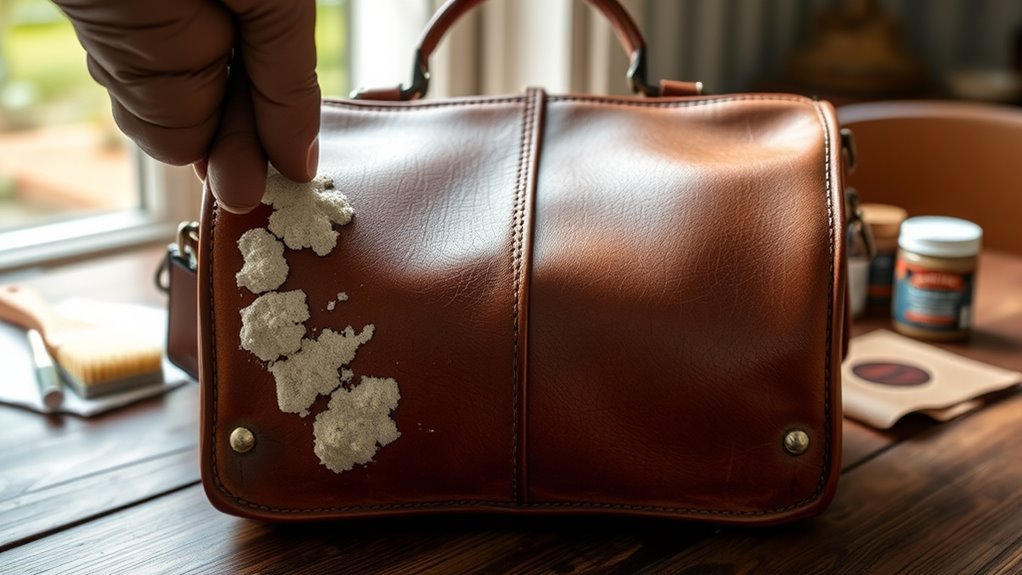
White residue on a leather bag is usually either wax or fat bloom, a harmless powder or film that comes up from the leather, or mold, which is a fungal growth that needs prompt, careful handling. Bloom wipes off, and tends to return after wiping. Mold looks fuzzy or spotty, often smells musty, and spreads in damp conditions. If you are not sure, treat it as possible mold, and avoid breathing in the dust.
What Causes White Residue on Leather?
Leather is treated with oils, fats and waxes during tanning and finishing. In some conditions, these can migrate to the surface and form a pale, powdery or waxy film. This is called bloom. The other common cause is mold, which grows when leather stays damp or humid. Salts from water, or from a spill, can also leave white marks. The cause matters, because the treatment is different.
How to Tell Mold From Wax Bloom
- Texture: bloom is smooth and waxy or powdery, and it wipes off as a film. Mold is often fuzzy, spotty or web-like.
- Smell: mold usually has a musty smell. Bloom has little or no smell.
- Pattern: bloom tends to appear evenly, or in patches where the leather was folded. Mold tends to grow in round spots, and where it is damp and still, such as in folds and under flaps.
- Color: mold may be white, gray, green or black. Bloom is generally white or pale.
- Conditions: mold needs moisture and poor airflow. If the bag has been stored in a damp place, suspect mold.
How to Inspect the Bag First
- Take the bag outdoors, or to a well-ventilated place, and wear a mask and gloves if you suspect mold.
- Look at the residue in good light.
- Touch a small area with a dry cloth. A film that wipes away easily may be bloom.
- Smell the bag.
- Check the lining, the seams and the folds, where mold often starts.
How to Remove Wax Bloom
- Wipe the surface with a clean, dry, soft cloth, or a soft brush, to remove the film.
- If a residue remains, wipe lightly with a cloth that is slightly damp.
- Let the bag dry at room temperature.
- Buff gently with a soft cloth to even the finish.
- If necessary, apply a very small amount of leather conditioner, and buff. See how to condition leather.
Bloom may return in some conditions, which is normal. Do not use heat to melt it back in, since heat can damage leather.
How to Deal With Mold
- Move the bag away from other items, and work outdoors or in a ventilated place, wearing a mask and gloves.
- Brush off the surface mold with a soft brush, or wipe it with a dry cloth. Throw away the cloth, or wash it at once.
- Wipe the area with a cloth that is slightly damp with a solution of equal parts of water and rubbing alcohol, as a last resort, and test on a hidden spot first, since alcohol can lighten dye and dry out leather. Use as little as possible.
- Let the bag dry in a ventilated place, away from direct sun and heat.
- Once it is completely dry, condition the leather lightly, to replace lost oils. See how to condition a leather bag without making it greasy.
- Clean the inside and the lining, and let it dry.
Do not use vinegar, bleach or strong household cleaners, which can damage leather. If the mold is widespread, or if the bag is valuable, ask a leather care professional.
Water Marks and Salts
White marks can also come from water that has dried on the leather, leaving minerals behind. These marks can be hard to remove at home. See how to deal with water stains on leather.
How to Prevent Mold and Bloom
- Store the bag in a cool, dry place with moderate humidity, ideally about 40 to 55 percent.
- Keep air moving around it, and do not store it in a sealed plastic bag. Use a breathable cotton dust bag.
- Dry a wet bag at room temperature, and do not put it away damp.
- Stuff it lightly with acid-free tissue.
- Check stored bags every few months.
- Do not over-condition, since too much conditioner can leave a residue.
- Keep the bag away from basements, bathrooms and sealed cupboards that may be damp.
See how to store handbags for more.
When to Call a Leather Care Professional
Severe Mold Spread
If the mold has gone through the leather into the lining, or has returned after you cleaned it, a professional can treat the bag more safely.
Stubborn Marks
If the residue does not come off, or comes back quickly, ask a specialist.
Valuable Bags
If the bag is expensive or has sentimental value, take it to a professional before trying treatments at home.
Other Problems That Look Similar
Sticky or hazy surfaces on patent leather are different. See why patent leather bags get sticky. A lining that bunches or looks stained from moisture is a separate matter. See why a handbag lining bunches up.
Frequently Asked Questions
How Do I Remove Mold From a Leather Bag?
Brush it off outdoors, wearing a mask, wipe the area carefully, let the bag dry fully and condition it lightly. Ask a professional for serious cases.
Why Does Mold Grow on Bags?
Because of moisture and poor airflow, particularly in storage.
Is the White Stuff on Leather Always Mold?
No. It may be a wax or fat bloom, which is harmless, or salt from water.
Conclusion
White residue can be harmless bloom or a sign of mold. Check the texture, the smell and the conditions, and treat gently. Keep your bags dry, ventilated and stored with care to prevent trouble in the future.

