
To measure a purse zipper before replacing it, take three measurements. First, measure the length along the teeth from the top stop to the bottom stop, not the fabric tape. Second, find the size, or gauge, by reading the number on the back of the slider or measuring the width of the closed teeth in millimeters. Third, measure the width of the tape. Then note the type of teeth, the color and whether the zipper has one slider or two.
Get Accurate Measurements for Your Purse Zipper
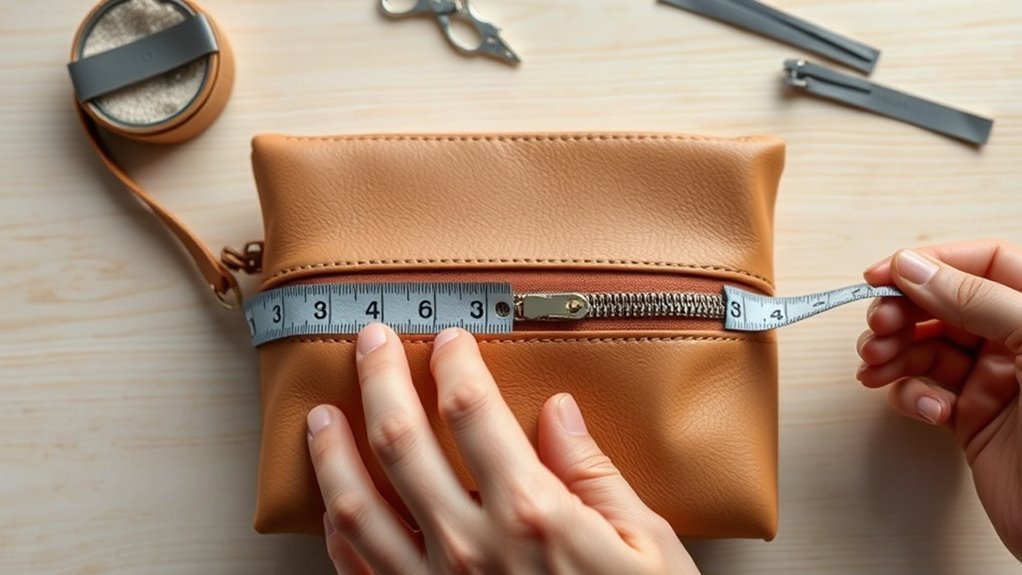
Length is the first measurement. Close the zipper and lay the opening as flat as you can. Measure along the teeth from the top stop, the small clip above the last tooth, to the bottom stop, the bar that ends the chain. The fabric tape that extends past the stops does not count.
Gauge is the second. With the zipper closed, measure straight across the teeth from one outer edge to the other, in millimeters. Do not include the tape. The result corresponds to the size number: about 3 mm is a #3, about 5 mm is a #5.
Check the back of the slider as well. Many makers stamp the size number there, sometimes followed by letters for the tooth type. If the stamp and your measurement disagree, trust the measurement.
Tools You’ll Need for Measuring Zippers
You need very few tools. A flexible tape measure is best for length, because bag openings are often curved. A ruler with millimeter marks works for gauge, and a caliper is more precise if you have one.
Good light and a magnifying glass help you read the tiny number on the slider. A phone camera with zoom does the same job.
Keep a notepad or your phone at hand, and write each number down as you take it. A seam ripper is useful if you need to open a few stitches to see where the zipper ends inside the lining.
If the old zipper is already out of the bag, measure it flat on a table. That is the most accurate method.
Take each measurement twice. A few millimeters matter when the zipper has to fit an existing opening.
Essential Zipper Measurement Techniques
The method changes slightly with the type of zipper. Most purse zippers are closed-end, which means the two sides stay joined at the bottom. Measure these from top stop to bottom stop.
Many bags have a zipper with two sliders that meet in the middle or at one end. These have a stop at each end, so measure from one stop to the other. Separating zippers, which come apart completely like a jacket zipper, are rare on purses. They are measured from the top stop to the bottom of the retainer box.
Some bag zippers are longer than the opening and end in a loose tail with a fabric or leather tab. Measure the full length of the teeth, and also note the length of the opening itself. Record whether the ends are sewn into the side seams or hang free.
Measure the opening as a check. For a zipper sewn in from seam to seam, the length of the teeth should match the opening closely.
Finally, measure the width of the tape on one side, from the outer edge of the tape to the teeth. A replacement with much narrower tape may not reach the original stitch line.
Write all of these down before you remove the old zipper, while everything is still in place.
Understanding Zipper Gauge and How to Measure It
The gauge is the size of the zipper chain. It is written as a number after a hash sign, such as #3 or #5, and it is roughly the width of the closed teeth in millimeters.
On handbags, #3 coil zippers are common for inner pockets and small pouches. #5 is the usual size for the main opening of an everyday bag. Larger totes, travel bags and heavy leather bags may use #7 or #8.
Sizes are approximate and vary a little between makers and tooth types. A #5 metal zipper and a #5 coil zipper do not measure exactly the same.
The gauge matters most if you plan to reuse the slider or buy a slider separately. A slider only works on the size and tooth type it was made for.
If you are replacing the whole zipper, choose the same gauge as the original so it fits the opening and matches the look of the bag.
Choosing the Right Zipper Type for Your Purse
Size is only part of the match. The replacement should also be the same type as the original.
Look at the teeth, the weight and the way the ends are finished.
A zipper of the right length but the wrong type will often not sit or run properly.
Zipper Material Options
Zipper teeth come in three main types, and you can tell them apart by looking closely.
Coil zippers have teeth made from a continuous spiral of nylon or polyester. They are flexible, light and good around curves, which makes them the most common choice for bags and linings. Metal zippers have separate teeth of brass, nickel or aluminum clamped to the tape. They are strong and decorative, and they suit leather bags.
Molded plastic zippers have chunky individual teeth formed directly onto the tape. They are light and do not corrode, and they are seen mostly on casual and sporty bags.
Match the type to the bag. A curved opening needs the flexibility of a coil zipper, and a stiff metal zipper can pucker there.
Match the metal color too. A brass-tone zipper next to silver-tone hardware looks like a repair.
Zipper Weight Considerations
The zipper should suit the weight of the bag material.
Small gauges such as #3 suit thin fabrics, linings and pockets. Medium gauges such as #4.5 and #5 suit canvas, nylon and most leather handbags.
Heavy gauges from #7 upward suit thick leather, luggage and bags that carry heavy loads.
A zipper that is too light for the bag wears out quickly. One that is too heavy is stiff and hard to sew in neatly.
When in doubt, copy the original. The maker chose it to suit the bag.
Closure Types for Purses
Note how the zipper opens and closes. A closed-end zipper with one slider is the simplest. A two-way zipper has two sliders, which is handy on wide openings.
Check the slider too. Some sliders lock in place when the pull is released, and others slide freely. Bag zippers usually have non-locking sliders so they run easily.
Look at the pull as well. Many handbags have a leather or branded metal pull that can be moved to the new slider, so keep it.
Top Measurement Mistakes to Avoid for Zipper Replacement
A few mistakes cause most wrong orders. The first is measuring the tape instead of the teeth. Zipper length always means the distance between the stops.
The second is guessing the gauge by eye. A #3 and a #5 look similar until you put a ruler across them.
The third is ignoring the type. A coil slider will not run on metal teeth, and a separating zipper will not suit a bag that needs a closed end.
The fourth is measuring a zipper that is distorted. If the tape is stretched or the bag is overstuffed, empty the bag and flatten the opening first.
The last is forgetting the tail. If the zipper extends past the opening, order the full length of the teeth, not the length of the opening.
What to Write Down Before You Order
Before you order, put everything on one list.
You need the length of the teeth between the stops and the gauge. Add the tooth type, which is coil, metal or molded plastic.
Add the tape width, the tape color and the color of the teeth or metal finish.
Note whether there are one or two sliders, and whether the sliders lock. Take a clear photo of the old zipper and the back of the slider, since a supplier or repairer can often identify it from the picture.
If you cannot find the exact length, buy a slightly longer closed-end coil zipper. It can be shortened by sewing a new stop across the teeth. Metal zippers are harder to shorten, so match those closely.
Frequently Asked Questions
How Do I Know What Size Replacement Zipper I Need?
Look for a number on the back of the slider. If there is none, close the zipper and measure the width of the teeth in millimeters. About 3 mm means a #3, and about 5 mm means a #5. Then measure the length between the stops.
Which Is Bigger, a #3 or a #5 Zipper?
A #5 is bigger. The number is roughly the width of the closed teeth in millimeters, so a #5 is about 5 mm wide and a #3 about 3 mm.
How to Replace a Zipper Slider on a Purse?
Buy a slider of the same size and tooth type as the zipper. Remove the top stop, slide the old slider off and the new one on, then fit a new stop or sew a few tight stitches across the end. The original pull can usually be moved to the new slider.
How Is a Zipper Measured?
Length is measured along the teeth from the top stop to the bottom stop, without the tape ends. Size, or gauge, is the width of the closed teeth in millimeters.
Conclusion
Measuring a purse zipper takes a few minutes and avoids a wrong order. Measure the teeth from stop to stop, find the gauge from the slider or with a ruler, and note the tooth type, tape width and color. Check each number twice, and copy the original zipper as closely as you can.
Sources: American Sewing Guild: The Zipper Files.

