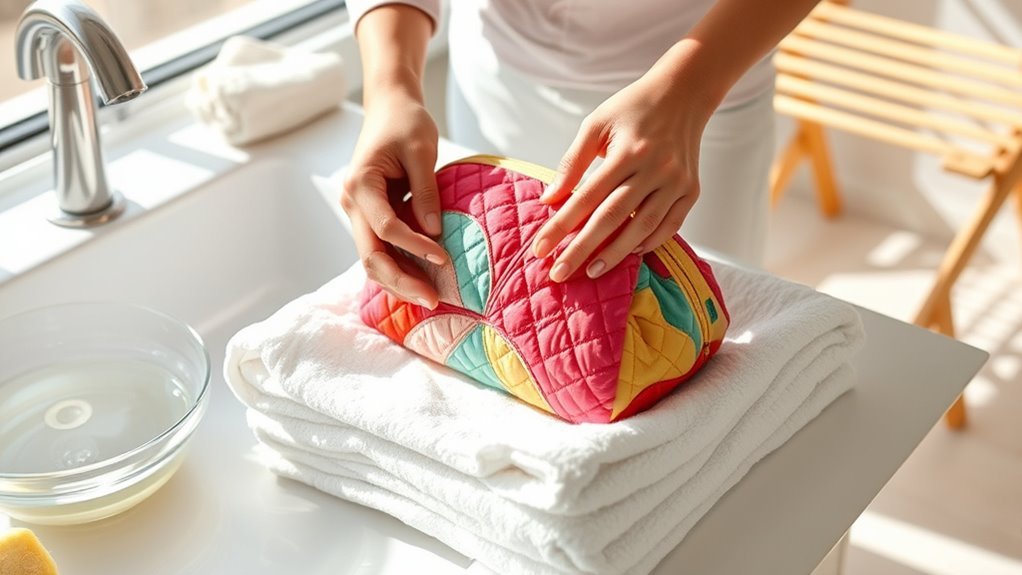
To clean a quilted fabric purse, check the care label first. Brush off loose dirt, then spot clean stains with a cloth dampened in mild soapy water. Wipe the soap out with a clean damp cloth and press the area with a dry towel. To dry the padding, stuff the purse, lay it flat in moving air, and turn it every few hours. The padding must be dry all the way through before you store the bag.
Gather Your Cleaning Supplies
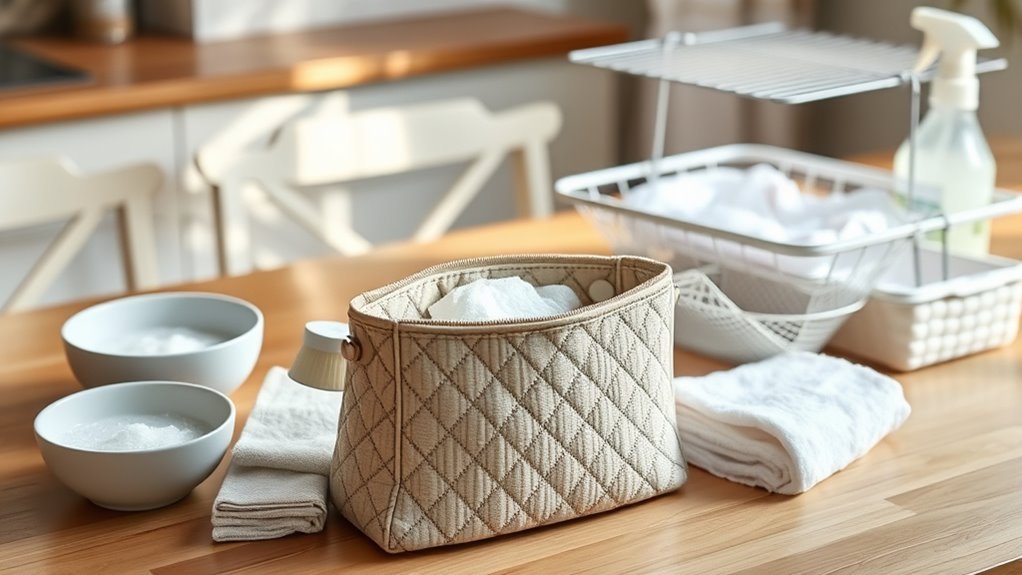
Gather your supplies before you start. You need two or three soft white microfiber cloths. White cloths will not transfer dye to the purse.
For the cleaner, use a mild liquid laundry detergent or clear dish soap. You do not need a special product. Mix a few drops into a small bowl of cool or lukewarm water. Keep a second bowl of plain water for rinsing the cloth.
Have a clean, dry towel ready to press out moisture, and a soft brush or lint roller for dust.
A fabric protector spray is optional. It helps a clean purse resist new stains. Use it only on a dry bag, and test it on a hidden spot first.
How to Remove Loose Dirt and Debris
Dry dirt comes off more easily before the fabric gets wet, so always start here. Empty the purse and shake it out, upside down, over a bin.
Then go over the outside with a soft brush or a lint roller.
This step keeps you from rubbing grit into the fabric when you spot clean.
Shake Off Debris
Open every pocket and turn the purse upside down. Shake it gently so crumbs and dust fall out.
Check the seams and the quilted channels, where dirt collects. Pull the lining out if it is loose, and brush it off.
A lint roller picks up hair and fluff from the surface. Doing this every week or two keeps dirt from working into the stitching.
Use Soft Brush
Use a soft clothes brush or a clean, soft toothbrush.
Brush in one direction, following the quilting lines. Short, light strokes are enough. Hard scrubbing can fuzz the fabric and pull the stitches.
Spend extra time on seams, corners, and the base, where dirt builds up fastest.
A quick brush every few weeks keeps grime from building up.
Make sure the brush itself is clean and dry, or it will put dirt back on the fabric.
If the purse has leather trim or handles, keep the brush and water off those parts. Leather needs its own cleaner.
Spot Cleaning: Best Practices for Stains
Most marks on a quilted purse can be spot cleaned. Work on one stain at a time.
Dip a cloth in the soapy water and wring it out until it is only damp. Blot the stain from the outside toward the middle. Do not rub, because rubbing spreads the stain and roughs up the fabric. Test the soap on a hidden spot first to check that the color holds.
For oily stains, sprinkle on cornstarch, leave it for an hour or more, and brush it off before you use soap. For ink or dye transfer, a professional cleaner is the safer option.
Use as little water as you can. The padding under the fabric soaks up water like a sponge and takes a long time to dry. A damp surface is fine. A wet filling is what leads to mildew and a musty smell.
How to Rinse and Dry Your Quilted Fabric Purse
The care label decides how far you can go. If it says spot clean only, do not put the purse under the tap. If it says hand wash or machine wash, you can rinse the whole bag.
For a purse that is labeled washable, follow these steps:
- Use a mild detergent mixed with lukewarm water.
- Rinse thoroughly under cool, running water to eliminate soap residue.
- Avoid harsh chemicals that could damage the material.
After rinsing, press the purse between two clean towels to push the water out. Reshape it as you go.
Do not wring or twist it. That can bunch the padding and pull the quilting stitches.
For a spot-clean-only purse, skip the rinse. Wipe the cleaned area with a cloth dampened in plain water until no suds come up, then press it with a dry towel.
Either way, dry the purse away from direct sun and strong heat, which can fade the fabric.
Some cotton quilted bags can go in the washing machine on a cold, gentle cycle. Only do that if the label or the maker says so, and take out any removable base board first.
Maintain Your Purse’s Shape While Drying
Quilted fabric has a layer of padding, usually polyester batting, between the outer fabric and the lining. It dries slower than the surface, so the purse can feel dry outside while the filling is still damp.
Stuff the purse with clean, dry towels or plain white paper. This holds the shape and pulls moisture from the inside. Do not use newspaper, because the ink can transfer.
Lay the purse flat on a dry towel in a room with good airflow. A fan helps a lot. Turn the purse over every few hours, and swap the stuffing when it feels damp. Do not hang a wet purse by its straps, because the weight of the water can stretch them.
Expect drying to take a full day, and up to two days after a full wash. To test it, squeeze the thickest part. If it feels cool or damp, give it more time. Then smooth the padding flat with your hands.
A hair dryer on the cool setting can speed things up. Skip hot air and radiators, which can shrink the fabric or warp the padding. Never store the purse until the padding is fully dry.
How to Prevent Future Stains
A little prevention saves most deep cleans.
Treat spills right away, brush the purse regularly, and think about a fabric protector spray.
Regular Cleaning Routine
A simple routine keeps a quilted purse looking fresh:
- Regularly brush off dirt and debris with a soft brush to prevent stains from setting in.
- Spot clean any spills immediately using a damp cloth and mild soap to minimize the risk of permanent staining.
- Store your purse in a cool, dry place, avoiding dirty or abrasive surfaces.
A fabric protector spray adds a light barrier against spills. Reapply it after each full clean, following the directions on the can.
Every month or so, empty the purse and wipe the lining with a barely damp cloth. Let it air out before you refill it.
Spot Treatment Techniques
Speed matters most with spills. Blot at once with a clean, dry cloth to soak up as much as you can.
If a mark remains, dab it with a cloth dampened in mild soapy water, then with plain water. Do not soak the spot.
Watch where you set the purse down. Dirty floors and dark denim can both leave marks on light fabric. Keep pens capped and makeup in a pouch to protect the lining.
Storage Solutions for Your Quilted Fabric Purse
Good storage keeps the padding plump and the fabric clean. Follow these basics:
- Choose a cool, dry place: This prevents mildew and protects the purse’s structure.
- Use protective coverings: A dust bag or pillowcase can shield your purse from dust and scratches while it’s stored away.
- Stuff the interior: Use acid-free tissue paper or a soft cloth to retain its shape and avoid creasing.
Do not stack heavy things on top. Weight flattens the padding and leaves dents in the quilting.
Keep the purse out of direct sun, which fades fabric over time. Make sure it is fully dry before it goes into a dust bag.
Should You Consider Professional Cleaning?
Home cleaning handles everyday dirt. Some jobs are better left to a professional.
A cleaner who handles handbags has solvents and tools that are not sold for home use.
It costs more, so save it for the cases below.
Expertise In Stain Removal
Call a professional when a stain does not lift after one or two gentle tries. More scrubbing at home usually makes it worse.
A cleaner can tell what the stain is and choose a method to suit the fabric.
Professional help makes most sense in these cases:
- Specialized Agents: They use specific cleaning agents that tackle stains like oil or ink more effectively than household cleaners.
- Expert Techniques: Professionals employ methods tailored to delicate fibers, reducing the risk of fading or distortion.
- Value Preservation: For valuable or designer bags, investing in professional cleaning can maintain resale value and appearance.
The same goes for a purse with leather trim, a silk or velvet shell, or a label that says dry clean only.
Avoid These Common Cleaning Mistakes
A few common mistakes do most of the damage. The first is bleach or strong stain removers. They can strip the color and weaken the fabric.
The second is machine washing a purse that is not made for it. Agitation can bunch the padding, and hot water can shrink the fabric. Use the machine only when the care label allows it, on a cold, gentle cycle.
The third is soaking a spot-clean-only purse. The padding holds the water and dries very slowly. The fourth is ignoring the care label, which is the best guide you have.
The last is drying with high heat. A hot hair dryer, a radiator, or a tumble dryer can shrink the fabric and warp the padding. Air drying takes longer but is far safer.
Quick Care Checklist for Quilted Fabric Purses
Here is the whole routine in short:
Here are some essential fabric maintenance tips:
- Gentle Cleaning: Use a soft, damp cloth to wipe the surface, steering clear of harsh chemicals.
- Deep Clean: Mix mild detergent with warm water, apply using a soft brush, and rinse thoroughly to avoid residue.
- Proper Storage: Stuff your purse with tissue paper or a clean towel to maintain its shape and padding.
Always air dry away from direct sun, and wait until the padding is dry before you use or store the purse.
Check now and then for loose threads in the quilting. Knot or stitch them down early, before the pattern starts to come apart.
Small, regular care beats one big wash.
Frequently Asked Questions
How to Wash the Inside of Your Purse?
Empty the purse and shake out crumbs. Pull the lining out if you can. Wipe it with a cloth dampened in mild soapy water, then with plain water. Leave the purse open to air dry before you refill it.
Are Vera Bradley Bags Washable?
Many are. Vera Bradley says most of its cotton bags can be machine washed cold on a gentle cycle with a gentle detergent, then line dried or laid flat. Some styles are spot clean only, so check the care instructions for your exact bag. Close all zippers before washing.
Conclusion
A quilted fabric purse is easy to keep clean if you respect the padding. Brush off dry dirt, spot clean with very little water, and follow the care label for anything more. Then give the padding time to dry all the way through.
Sources: Vera Bradley: How to Clean Your Handbag, Vera Bradley: How to Wash Your Bag.