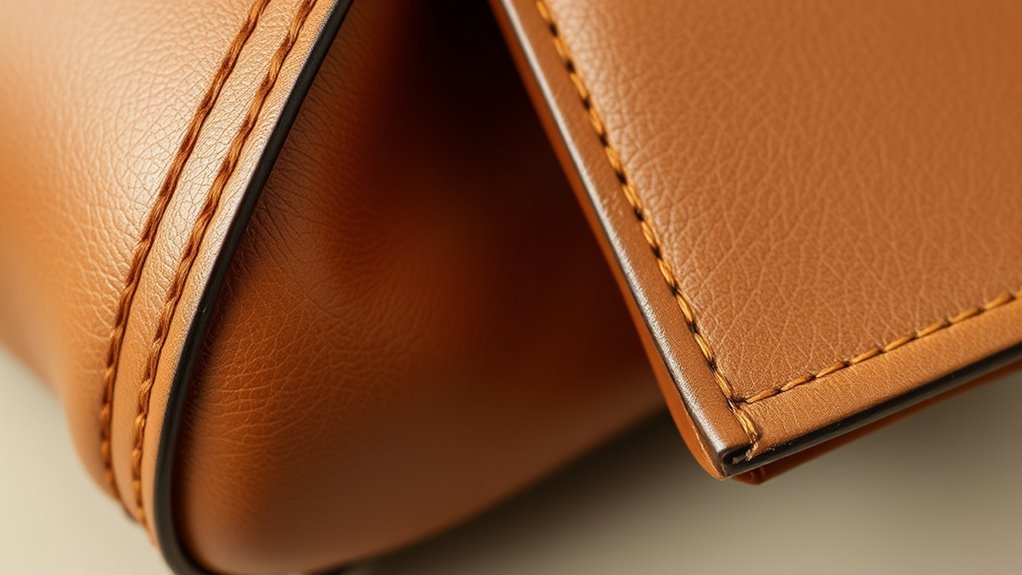
Sewn seams are stronger and easier to repair than glued seams. Stitches hold the layers together mechanically, so the seam keeps working even as the bag ages. Glue alone can let go with heat, moisture and time. In practice, most good handbags use both: glue to hold the layers in place and stitching to carry the load. A seam that is only glued is the one to watch, especially at handles and straps.
Understanding Sewn vs. Glued Seams
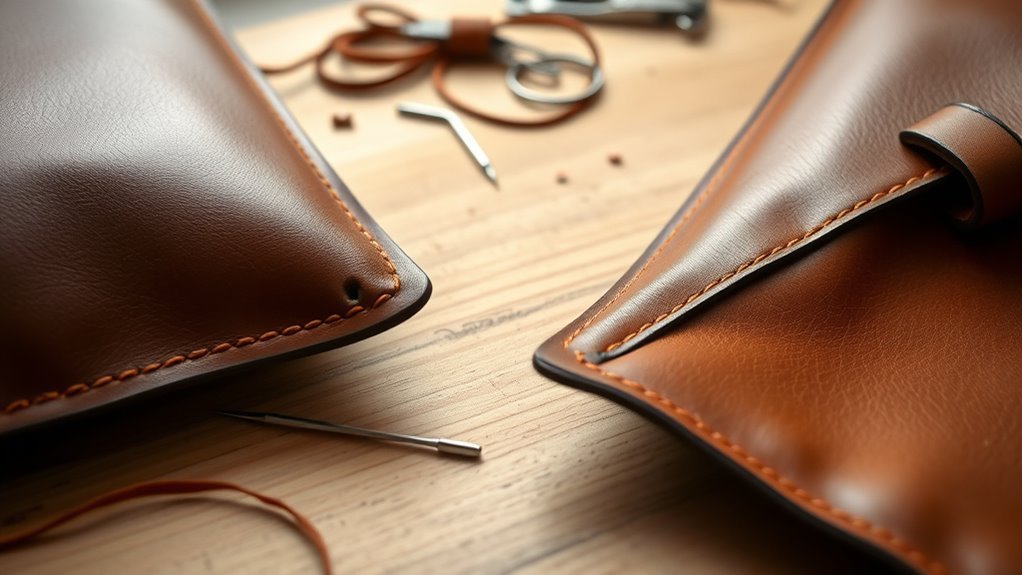
A seam is where two pieces of a bag are joined. There are two basic ways to join them: thread or adhesive.
A sewn seam passes thread through both layers again and again. Each stitch is a small mechanical lock. The seam is as strong as the thread, the material and the number of stitches.
A glued seam bonds the surfaces with adhesive. It can be very neat, with no holes or visible thread. Its strength depends on the glue, on how well the surfaces were prepared and on how the glue ages.
Many seams are both. Leather workers usually glue the layers first so they cannot shift, then stitch through them. The glue positions the layers and the stitching holds them.
Glue-only construction is most common in low-cost bags, in linings and trims, and on folded edges.
Some technical and waterproof bags use heat-welded or bonded seams. These are a special case and can be very strong, because the materials are fused together.
Why Sewn Seams Provide Superior Strength
Stitching is strong because it does not rely on a surface bond. The thread passes through the material, so the layers cannot peel apart without breaking thread or tearing the material.
Thick, strong thread adds to this. Bonded nylon and polyester threads resist abrasion and do not rot. Hand-sewn leather goods often use waxed thread, which grips each hole tightly.
The stitch type matters too. In a hand-sewn saddle stitch, two needles pass through every hole from opposite sides. If one thread wears through, the other still holds that stretch of seam.
Stitching also ages well. Heat and humidity that weaken many adhesives have little effect on polyester or nylon thread. When a seam does open, it can be restitched through the same holes.
The Risks Associated With Glued Seams
Glue is not always a weakness, but a seam that relies on glue alone carries some risks:
- Glue degradation: Adhesives can weaken over time due to temperature and humidity changes, leading to potential separation.
- Lack of redundancy: Unlike stitched seams, if the adhesive fails, there’s no backup to keep materials intact.
- Lower bond strength: The bond strength of glues often falls short of high-quality stitching, making seams more vulnerable to stress.
Heat is the most common trigger. A bag left in a hot car or near a heater can start to separate along glued edges.
Repair is harder as well. Old adhesive has to be cleaned off before new glue will hold, and that is difficult inside a finished bag.
For decorative parts and light loads, glue is fine. For anything that carries weight, look for stitching, rivets or both.
Repairing Sewn vs. Glued Seams: What You Need to Know
The two kinds of seam fail in different ways, and they are repaired differently.
A sewn seam usually fails a little at a time. A few stitches wear through and a short gap opens. The fix is to restitch that section through the original holes with strong thread, overlapping the sound stitches at each end.
A glued seam often fails along a longer stretch. To repair it, open the loose section, remove the old adhesive, apply fresh contact cement to both surfaces, let it turn tacky, then press and clamp.
A re-glued seam is rarely as strong as new. Where the seam carries load, add a row of stitching after gluing. Do not rely on glue alone for handles or strap anchors. For a valued bag, a repair shop can do this neatly.
How Stitching Techniques Impact Seam Strength
Not all stitching is equal. The method, the thread and the spacing all affect strength.
- Hand sewing, particularly saddle stitching, interlocks threads for redundancy and superior seam durability.
- Machine sewing often uses the lockstitch method, which is fast and strong. If a thread breaks, the stitches near the break can loosen.
- Thicker, high-quality threads improve durability compared to thinner machine threads.
Machine stitching is strong enough for nearly all handbags when it is done well. What matters is even tension, enough stitches per inch and reinforcement at stress points. Stitches that are too close together can weaken leather, like the perforations in a sheet of stamps.
Common Materials for Sewing and Gluing
Both methods depend on their materials. A good seam uses thread or adhesive that suits the leather or fabric.
For sewing, polyester, nylon and linen threads are the main choices. For gluing, contact cement and water-based leather glues are the most common.
Knowing these helps you judge a bag and choose the right supplies for a repair.
Thread Types Overview
Thread has to be strong, resist rubbing and suit the material.
Common options include:
- Natural Threads: Linen and cotton offer strength and a classic look.
- Synthetic Threads: Nylon and polyester resist abrasion and moisture, ideal for high-use items.
- Waxed Threads: Waxed polyester thread is the usual choice for hand sewing leather.
Thicker thread is stronger, but it needs larger holes. Makers balance thread size against the thickness of the leather.
Adhesive Material Options
Adhesives differ in strength, flexibility and how they age.
Contact cement is the standard for leather. It is applied to both surfaces, left to dry until tacky and then pressed together for an instant, flexible bond. Water-based leather glues are lower in odor and easier to use at home, with a slightly weaker hold.
Polyurethane adhesives are strong and flexible and are widely used in factory production.
Hot glue and ordinary craft glue are poor choices for bags. They turn brittle or soften with heat, and they do not flex with the material.
Whatever the glue, clean, roughened surfaces and firm pressure make the difference between a bond that lasts and one that peels.
Aesthetic Differences: Sewn vs. Glued Seams
The two methods also look different, which is why designers sometimes choose glue for style reasons.
Stitching is visible and often decorative. Even, straight stitches in a matching or contrasting thread are a sign of care.
Glued and bonded seams give a smooth, uninterrupted surface. They suit minimalist designs and very thin materials that stitching would weaken.
Consider the following when choosing:
- Textural Variety: Sewn seams allow for different thread thicknesses and colors, improving your style.
- Craftsmanship Show: Hand-stitched irregularities highlight the skill behind the creation.
- Modern Aesthetic: Glued seams deliver a uniform and clean appearance, appealing to minimalists.
Looks can mislead, though. Some bags have decorative stitching that holds nothing, and some smooth seams hide stitching inside. Check the inside of the bag as well.
Essential Maintenance Tips for Prolonging Your Handbag’s Seam Integrity
Seams last longer with a little attention.
Look over the seams every few months, especially at handles, strap anchors and the base corners.
Small problems are cheap to fix. A few loose stitches caught early can save the whole seam.
Regular Cleaning Practices
Dirt and grit wear thread and work into glued edges. Keep seams clean with these habits:
- Regularly wipe down your handbag with a soft, damp cloth to remove dirt.
- Use a gentle leather cleaner and conditioner tailored to your handbag’s material.
- Store your handbag in a cool, dry place, away from direct sunlight.
Keep the bag away from heat and prolonged damp. Both weaken adhesives and can make glued edges lift.
Inspecting Stitching Regularly
A regular check takes only a minute.
Look for frayed, loose or broken threads, and for gaps where layers have started to part. Even, tight stitches are a good sign.
Brush dirt out of the stitching with a soft, dry brush. Do not pull on a loose thread. Trim it close or have it secured.
Condition leather every 3 to 6 months so it stays flexible around the seams. Dry, stiff leather cracks along stitch lines.
Choosing Between Sewn and Glued Seams: Key Factors to Consider
When you buy a bag, a quick look at the seams tells you a lot about how it will last. Keep these points in mind:
- Strength and Durability: Sewn seams, especially with techniques like saddle stitching, offer superior strength and allow for repairs.
- Repair Potential: Sewn seams can be easily fixed, while glued seams often necessitate complete replacement, limiting your options.
- Look: Sewn seams provide a refined, handcrafted look, showing craftsmanship, whereas glued seams can show visible adhesive residues.
Frequently Asked Questions
Is a Stitched Bag Always Better Than a Glued One?
Usually, for seams that carry weight. Stitching holds up better over time and can be repaired. Glue is acceptable for linings, trims and folded edges, and welded seams on technical bags are a strong exception.
Can a Glued Seam Be Repaired?
Often, yes. The old adhesive must be cleaned off, and fresh contact cement applied to both sides and clamped. The repair is stronger if a row of stitching is added afterward.
What Glue Is Used on Leather Bags?
Contact cement is the most common, along with water-based leather glues and polyurethane adhesives in factories. Ordinary craft glue and hot glue do not last on bags.
How Can You Tell if a Bag Is Sewn or Glued?
Look closely at the seams, inside and out. Real stitching shows thread entering the material at regular holes on both sides. Glued seams are smooth, sometimes with a thin line of dried adhesive at the edge.
Conclusion
Sewn seams are stronger, age better and can be repaired, which is why they are used wherever a bag carries weight. Glued seams look sleek and work well for light parts, but they can let go with heat and time. The best bags use both in the right places. Check the seams before you buy, and deal with loose stitches or lifting edges early.

