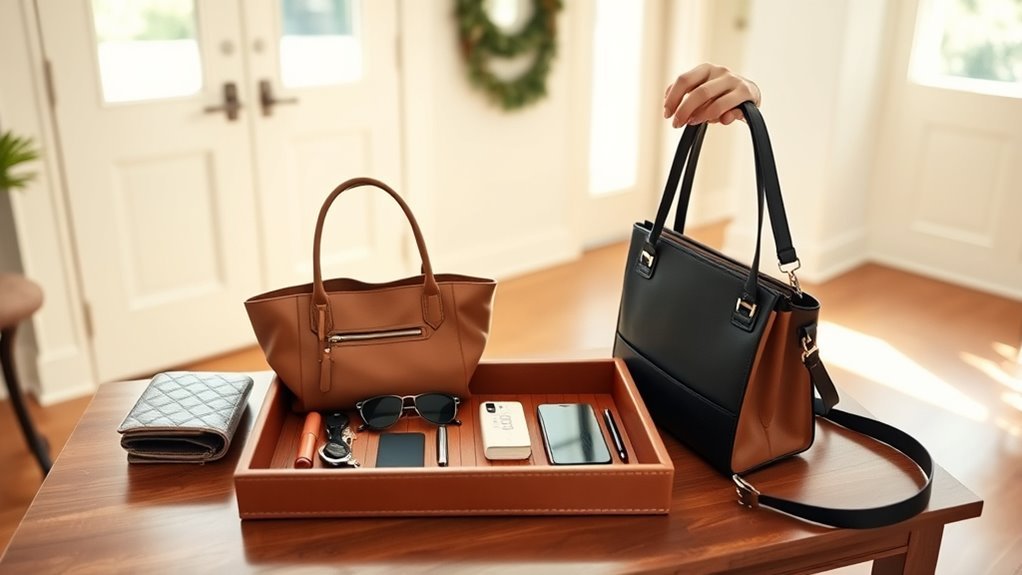
The fastest way to switch handbags without leaving anything behind is to stop moving loose items. Keep your essentials in one or two small pouches, or in a removable organizer insert, and move those instead. Empty the old bag completely, check every pocket and run through a short checklist: phone, wallet, keys. Swap bags the night before, not on your way out the door.
How to Switch Handbags Fast
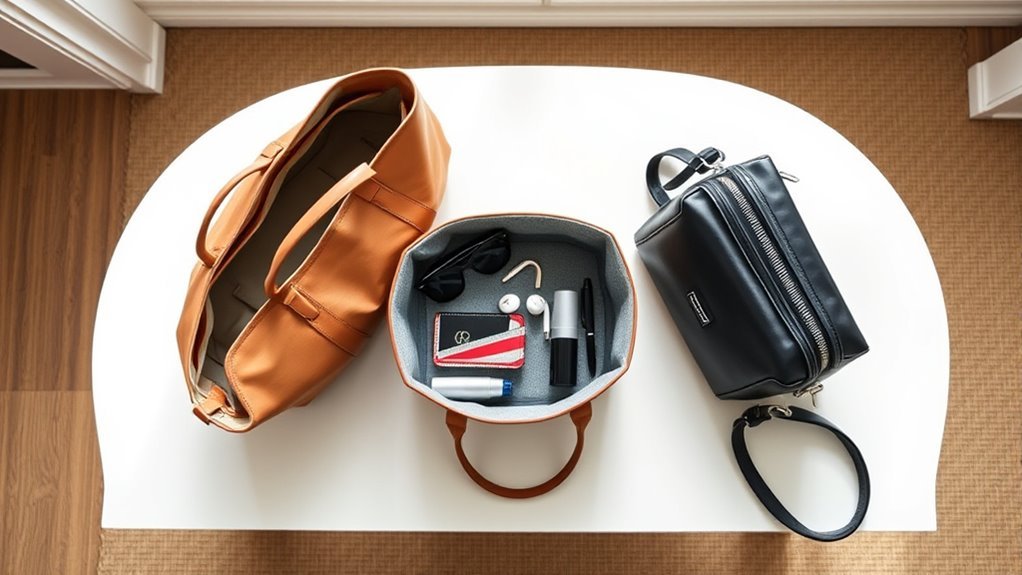
Switching is slow when everything is loose. Group small things into a pouch so they move as one unit instead of twenty.
Aim to move only a few items: your phone, wallet, keys and one or two pouches. A clear or mesh pouch helps, because you can see what is inside without opening it.
Do the swap the evening before. You have time to check pockets, and the morning starts with a packed bag.
Empty the old bag fully each time. Throw out receipts and wrappers, and give every item a fixed place in the new bag.
Use pouches in different colors or textures. You will know by sight or touch which one holds makeup and which one holds chargers.
Once the system is set up, a full switch takes about a minute.
Build a Go Bag for Essentials
A go pouch is a small bag that holds your daily must-haves and travels from handbag to handbag.
Choose one that fits inside your smallest regular bag. A flat zippered pouch works for most people. A clear one lets you spot items quickly.
If you carry a lot, use two or three pouches by category, such as essentials, beauty and tech. Each one lifts out in a single move.
Keep the go pouch light. Check it every week or two and remove anything you have not used.
Pack Cards, Keys, and Lip Gloss Together
Small items are the ones that get left behind. Keep cards, keys and lip gloss together in one pouch, and put that pouch in the same spot in every bag. The table shows the idea:
| Item | Benefit |
|---|---|
| Cards | Fast access |
| Keys | No misplacement |
| Lip gloss | Easy touch-ups |
| Transparent organizer | Quick visibility |
| Pouch styles | Day-to-night versatility |
Pick a pouch that suits how you carry. A slim card case and key pouch suit small bags, while a larger pouch can double as a clutch. Restock it when something runs out, so it is always complete.
Use a Zippered Pouch for Small Items
A zippered pouch is the simplest tool for fast switching. Nothing can fall out as you move it.
It also keeps lip gloss, coins and hair ties from sinking to the bottom of a large bag.
Choose a sturdy zipper and a wipe-clean material, since makeup and pens leak.
Essential Items Pouch
An essentials pouch holds the small things you need every day, such as lip balm, ID, cards, tissues and a pen.
Keep it to what you really use. A good pouch covers these basics:
- Keep IDs together.
- Store cards neatly.
- Separate cosmetics.
- Grab and go.
With everything in one place, you stop digging and stop forgetting. The pouch goes with you whether you carry a tote or a small crossbody.
A flat pouch can also be carried by itself for a quick errand.
Quick Bag Transfers
With a pouch, the transfer is three moves: lift it out, drop it into the next bag and close the zipper.
Loose items no longer roll around the bottom, so there is less to check when you empty the old bag.
A bright or textured pouch is easy to find in a dark bag. Open it now and then to make sure nothing has gone missing or expired.
Keep your phone and keys in fixed pockets, not in the pouch, if you reach for them often.
Keep Small Items Together
The rule is simple: nothing small travels alone. Anything smaller than your hand belongs in a pouch or a pocket.
A typical small-items pouch holds four things:
- Makeup
- Business cards
- ID
- Keys
If you often switch to a very small bag, keep a mini version of the pouch with just the basics.
Clean the pouch out regularly so it does not turn into a second junk drawer.
Choose a Purse Organizer for Fast Swaps
A purse organizer is a fabric or felt insert with pockets that sits inside your bag. You lift the whole insert out and place it in the next bag.
It works best between bags of similar size. Measure the inside of your bags and choose an insert a little smaller than the smallest one. Felt inserts hold their shape, and nylon ones are lighter and easier to wipe.
For bags of very different sizes, pouches are more flexible than one large insert. Many people use an insert for totes and a pouch for small bags.
Switch Purses in 30 Seconds
With practice, a switch takes well under a minute. The key is to move very few things: phone, wallet, keys and one essentials pouch.
Keep a short checklist in your head or on your phone, and say it as you pack. Phone, wallet, keys, pouch.
Put each item in the same kind of place in every bag. Keys go on a clip or in the front pocket, and the phone goes in the side pocket.
Switching the night before removes the time pressure, which is when most things get forgotten.
Avoid Forgetting Items When You Swap Bags
Most forgotten items are left in a pocket of the old bag. A few checks prevent that.
Keep essentials grouped, so there are fewer separate things to remember.
Before you put the old bag away, look inside it one more time.
Pack a Go Pouch
A dedicated go pouch is the best protection against forgetting. If your daily items always live in it, moving the pouch moves everything.
Outside the pouch, limit loose items to the big ones:
- Keys
- Phone
- Wallet
- Any daily must-have
Keep cheap duplicates in each bag you use often. Tissues, a pen, lip balm and a hair tie cost little and never need to move.
Review the pouch when the season changes. Swap sunscreen for hand cream, for example.
Keep Essentials Ready
Give your essentials one home between uses. A tray or hook by the door works well for keys, wallet and sunglasses.
Group the smaller things in a zippered pouch or a compact cosmetic bag. You move fewer pieces and spend less time.
Clip your keys to a strap or ring inside the bag. Clear out papers and receipts as you go.
Do not forget items that live in hidden pockets, such as a work badge, a spare key, medication or a transit card.
Double-Check Before Switching
Before you leave the old bag, run a quick check of your essentials: phone, wallet, keys and anything you use daily, such as glasses or medication.
Then check the bag itself. Open every zip and pocket, including the outside ones. Follow these steps:
- Confirm your essentials first.
- Use transparent organizers to spot missing items fast.
- Sort loose items into small pouches for easy transfer.
- Finish with a final glance inside your old bag.
If the bag is deep or dark, turn it upside down over a bed or a tray. Anything left will fall out.
The whole check takes a few seconds, and it saves a trip back home.
Clear Out Clutter Before You Switch
A cluttered bag is slow to switch. Take a minute to clear it out before each change.
Remove papers, wrappers and anything you do not need tomorrow. Put coins in a purse or a jar.
Use small pouches for things like lip balm, chargers and medicine, so they lift out together.
Clear or mesh pouches make it obvious what is inside, which makes it easier to decide what moves.
A lighter bag is also easier on your shoulder and on the bag itself.
Make Handbag Switching a Habit
Switching gets easier when it is a routine. The same steps in the same order soon become automatic.
Use the same pouches, the same pocket for keys and the same evening time for the swap. Build these habits:
- Pack pouches by category.
- Swap bags before bed.
- Clear out papers weekly.
- Keep one designated essentials clutch.
After a couple of weeks, you will know where everything lives in each bag.
The reward is freedom to use all your bags, not just the one that happens to be packed.
Frequently Asked Questions
How Often Should You Clean Out Your Purse?
A quick clear-out once a week is enough for most people. Remove receipts, wrappers and anything you did not use. Empty the bag fully every time you switch.
Is a Purse Organizer Insert Worth It?
Yes, if you switch between bags of similar size or carry a large tote. It keeps items upright and moves them all at once. For very small bags, a slim pouch works better.
How to Carry Less Stuff in a Purse?
Carry only daily essentials: phone, keys, wallet and one small pouch. Clear out the bag weekly and remove anything you did not use that week.
What Should Every Woman Have in Her Purse?
It depends on your day, but most people need a phone, wallet or card case, keys and ID. Useful extras are tissues, lip balm, a pen, any medication and a small charger.
Conclusion
Switching handbags is quick when your essentials travel in pouches or an organizer. Move the big items and the pouch, empty the old bag fully and check every pocket. Do it the night before and make it a habit. You will be able to change bags in about a minute without leaving anything behind.

