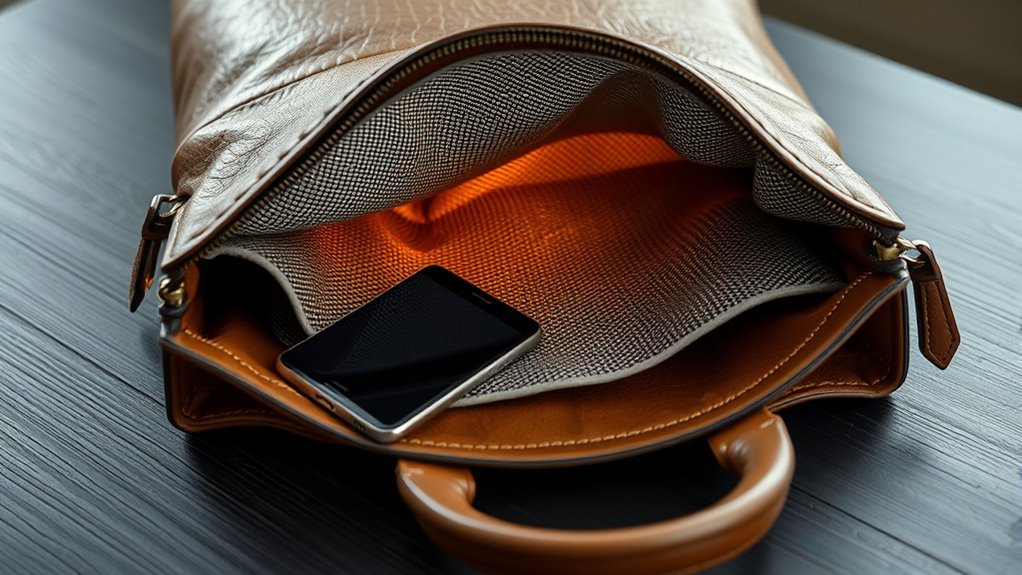
A radio frequency (RF) shielding lining is a layer of conductive material inside a bag or pocket. It works like a small Faraday cage. Radio waves that hit the metal layer are reflected or absorbed, so they cannot reach the cards, key fobs or phone inside. The shield only works when it surrounds the item completely, with the closure shut. It is most useful for keyless car fobs. For contactless bank cards, experts rate the risk of wireless theft as low.
What Is Radio Frequency Shielding?
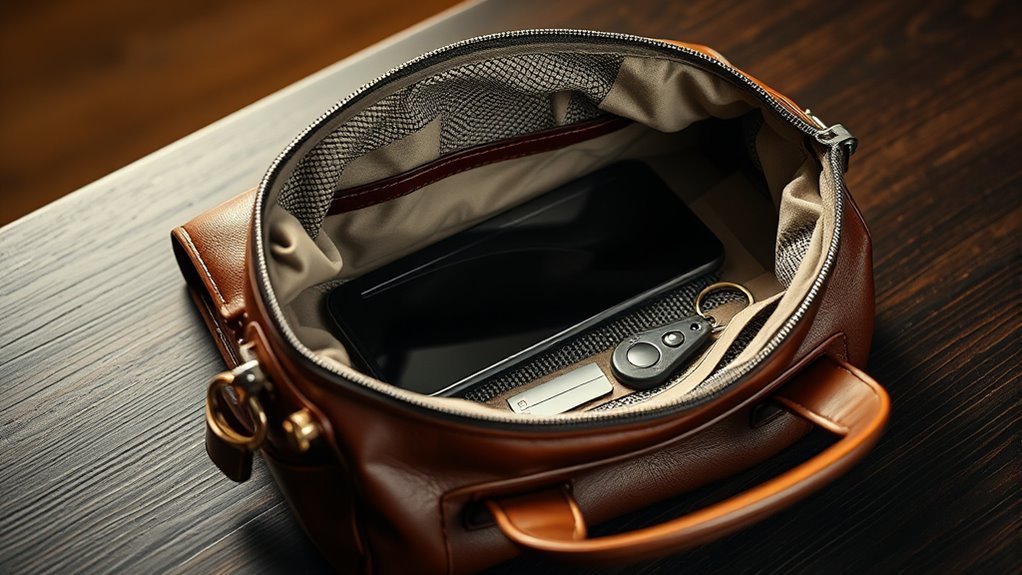
Radio frequency shielding means using a conductive material to block radio waves. Phones, contactless cards, key fobs and trackers all communicate by radio.
The strength of a shield is measured in decibels (dB). Each 10 dB cuts the signal power to one tenth. So 20 dB blocks 99 percent of the power, and 30 dB blocks 99.9 percent.
Copper, nickel, silver and aluminum are the usual shielding metals, because they conduct electricity well.
The same idea protects electronics in many industries. In a handbag, it is used for privacy and security, not to protect the devices themselves.
A shield does not remove signals from the air around you. It only stops them from passing through the lined pocket.
How Handbag Linings Block RF Signals
A shielded lining is usually a fabric woven with fine metal threads or coated with metal. When the pocket is closed, this fabric forms a conductive shell around whatever is inside.
Radio waves cannot pass easily through a closed conductive shell. Part of the wave bounces off, and part is absorbed as tiny electric currents in the metal. Very little reaches the item inside, and very little gets out.
How well this works depends on the signal. Contactless cards work only at a range of a few centimeters and with weak signals, so they are easy to block. Phone, Wi-Fi and Bluetooth signals are much stronger and need a better shield.
Gaps are the weak point. An open flap, a loose zipper or a worn seam lets signals leak in and out. A shielded pocket that is left open does almost nothing.
Materials Used in Shielded Handbag Linings
Most shielded linings use one of three materials: metal-coated fabric, fabric woven with metal fibers, or a thin metal foil laminated to cloth.
Metalized fabric is the most common in bags. It is soft, light and can be sewn like ordinary lining. Polyester coated with copper and nickel is a typical example.
Foil laminates block well when new, but foil cracks with repeated folding. They are better suited to flat card sleeves than to flexible pockets.
Some bags use two layers of shielding fabric for stronger blocking. This adds a little weight and stiffness.
What RF Threats Can It Block?
A shielded pocket can stop three kinds of wireless contact, as long as it is fully closed.
It stops contactless cards and passports from being read. It stops a keyless car fob from answering a signal. And, if the shielding is strong enough, it cuts a phone off from cellular, Wi-Fi, Bluetooth and GPS signals.
It does not make you invisible. It only isolates the items inside the pocket, and only while they stay there.
RFID Skimming and Wireless Data Theft
RFID skimming means reading a contactless card or tag with a hidden reader, without the owner noticing. It is the threat most shielded bags are sold to prevent.
The attack is possible in theory, but experts consider it rare in real life. AARP reports that such scams are largely unheard of, and Visa describes fraud from skimming as very unlikely.
There are reasons for this. Contactless payment cards work only at a range of a few centimeters. They also use security codes that change with each transaction, so copied data is of little use.
A shielded pocket does block these reads. It also blocks your own tap, so you must take the card out to pay.
The stronger case for shielding is the keyless car fob. Thieves can relay the signal from a fob to unlock and start a car, and police forces advise keeping fobs in a signal-blocking pouch.
So think of RF shielding as a low-cost extra, not a necessity. It protects against a narrow set of risks. Most card fraud happens online or through tampered card readers, where a lining cannot help.
How to Tell if a Handbag Is Shielded
Start with the label or product description. A shielded bag should say which pocket is lined and what it blocks, such as RFID cards only or phone signals too.
RFID-blocking and full signal-blocking are different claims. Many bags block only the card frequency and will not stop a phone or a car fob.
Then test it yourself. Simple tests tell you more than the label does.
Visual Signs Of Shielding
Shielding fabric often looks slightly metallic, in silver, gray or copper tones, and it may make a faint crinkling sound. Many makers hide it between the lining and the outer fabric, so you may not see it at all.
These are the usual clues to look for:
- Lining texture: You may notice a tight, metallic feel instead of soft textile fibers.
- Structure: The bag can hold its shape more firmly, with less flex at the walls and base.
- Seams and closures: Reinforced edges, magnetic flaps, or Velcro closures often signal an effort to reduce signal gaps.
Look for a dB rating or a stated frequency range. A claim with numbers is more useful than a logo.
Simple Shielding Tests
For a phone pocket, put your phone inside, close the pocket fully and call it from another phone. If it rings, the pocket does not block cellular signals.
For a card pocket, hold the closed pocket with your card inside against a contactless payment terminal or a transit gate. If the card reads, the shielding is not working.
For a car fob, put the fob in the closed pocket and stand next to the car. Try the door handle. If the car unlocks, the pocket is not blocking the fob.
Test with the pocket closed the way you would normally carry it. A pocket that only works when folded perfectly will fail in daily use.
Repeat the test every few months. Shielding fabric wears out with folding and rubbing.
These quick checks tell you what the bag really blocks.
When a Shielded Handbag Makes Sense
A shielded bag or pocket is worth having in a few specific situations.
The clearest one is carrying a keyless car fob. A shielded pocket stops relay theft while the fob is inside it.
It can also give peace of mind when you travel with a passport and several contactless cards, or when you want your phone fully offline for a while.
Taking a Phone Offline
A fully shielded pocket cuts a phone off from all networks. It cannot receive calls, messages or notifications, and it cannot be located through its signal.
Some people use this for privacy in meetings or for a break from interruptions. Remember that the phone keeps searching for a signal while it is shielded, which drains the battery faster. Airplane mode does much the same job and saves power.
You will also miss emergency calls and alerts while the phone is inside, so use the pocket on purpose, not by habit.
Travel and Car Keys
When you travel, a shielded pocket is a simple place for a passport, spare cards and a car fob.
It does not protect a laptop or phone from hacking over networks you choose to join. That needs software security, such as updates, strong passwords and care with public Wi-Fi.
Shielding adds very little weight. A lined pocket looks and feels much like an ordinary one.
At home, keep car fobs away from the front door, and store spare fobs in a shielded pouch as well.
What Shielded Handbags Can’t Do
Shielded handbags have clear limits. Most block only part of the radio spectrum, and none of them work when the pocket is open.
Treat them as a partial safeguard. Gaps, worn seams and thin fabric all let signals through.
They do not stop physical theft, pickpocketing or someone reading a card you have taken out. They do not protect against online fraud, phishing or data breaches, which cause most card losses.
For real protection, use the tools your bank and phone already offer: transaction alerts, card locks, strong passcodes and two-step sign-in.
A lining is one small layer of defense. It works best alongside those habits, not in place of them.
How to Choose a Shielded Handbag
To choose a shielded bag, first decide what you want to block. For cards and passports, an RFID-blocking pocket is enough. For a car fob or phone, you need full signal-blocking, which is a higher standard.
Check that the shielded pocket closes completely, with a zipper, a fold-over flap or a strong magnetic or hook-and-loop seal. A pocket with an open top will leak.
Make sure the pocket fits what you plan to put in it. A phone or fob should sit fully inside with the closure shut.
Look for stated test results, such as a dB rating and the frequencies covered. There is no single standard for these claims, so numbers from an independent lab are worth more.
Check the build quality too. Shielding fabric that is stitched in loosely or exposed to keys and pens will wear out faster.
Choose a bag you would carry anyway. The shielded pocket is a bonus feature, and it should not cost you the size or style you need.
Compare products by what they have been shown to block, not by marketing words such as military grade.
Then test it when it arrives, using the checks above.
Care Tips for Long-Lasting Protection
Shielding only works while the conductive layer is intact. Care is mostly about avoiding damage to it.
Check the seams, corners and folds of the lined pocket from time to time. A tear or a worn patch is a gap in the shield.
Do not crush or sharply fold the lined area. Repeated creasing breaks the fine metal coating.
Keep it dry. Moisture and sweat can corrode the metal over time and reduce its conductivity.
Clean the pocket by wiping it with a soft, slightly damp cloth. Do not machine wash it unless the maker says you can, and avoid harsh cleaners.
Retest the pocket every few months and after any washing or repair.
Frequently Asked Questions
What Do Faraday Bags Protect Against?
A Faraday bag blocks radio signals to and from the items inside. It prevents contactless cards and passports from being read, stops keyless car fobs from being relayed, and can cut a phone off from cellular, Wi-Fi, Bluetooth and GPS.
How to Protect From Radio Frequency?
To keep an item from being read or reached by radio, enclose it fully in a conductive pouch or lined pocket and keep the closure shut. For phones, airplane mode is a simpler choice. Test any pouch before you rely on it.
Where Is RF Shielding Located?
It is usually in one dedicated pocket or card slot, hidden between the lining and the outer material. Few bags are shielded all over, so check which pocket is the protected one.
What Is Radio Frequency Shielding?
It is the use of a conductive layer, usually metalized fabric, to block radio waves. In a handbag it keeps cards, fobs or phones from sending or receiving signals while they are inside the lined pocket.
Conclusion
RF shielding in a handbag lining is a simple idea: a closed conductive pocket that radio waves cannot cross. It works well for keyless car fobs and blocks card reads, though the risk to payment cards is low to begin with. Check what a bag claims to block, test it yourself, keep the pocket closed and look after the lining.
Sources: AARP: Do You Really Need an RFID-Blocking Wallet?; Crimestoppers UK: keyless vehicle theft.

