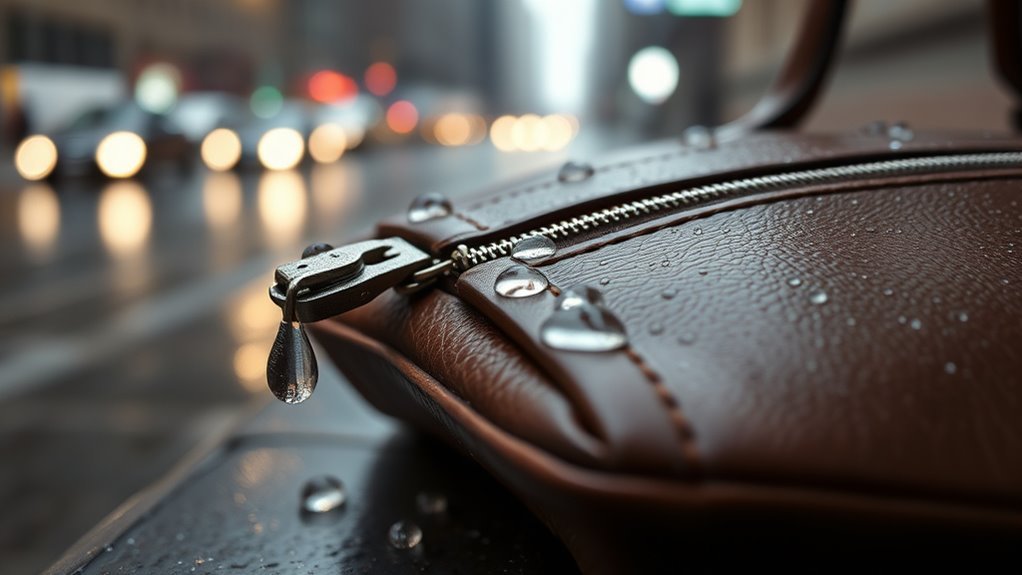
Most handbag zippers are not waterproof. A standard zipper lets rain through the gaps between the teeth, through the fabric tape and through the stitching that holds it in place. Coated water-resistant zippers shed light rain but can still leak in a downpour. Truly waterproof zippers exist, but they are made for dry bags and drysuits, not for handbags. A flap over the zipper, a treated outer fabric and a pouch for your phone give better protection.
Waterproof vs. Water-Resistant Zippers: What’s the Difference?
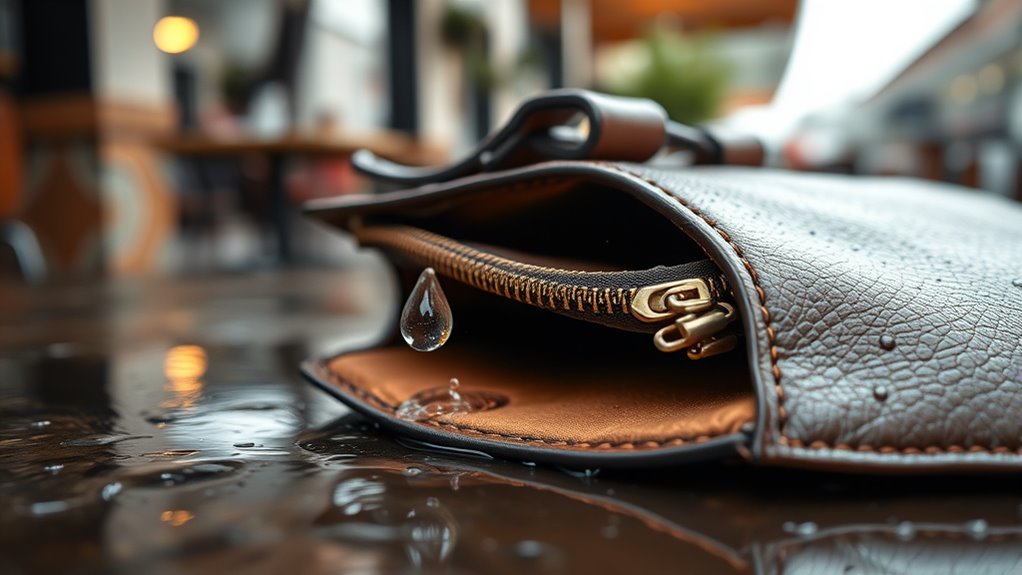
The two terms sound alike, but they describe very different zippers.
A waterproof zipper forms a continuous seal when it is closed, so water cannot pass even under pressure. This type is stiff, costly and needs regular care. It is used on dry bags, drysuits and marine gear, and it is very rare on fashion handbags.
A water-resistant zipper is a normal coil zipper with a polyurethane (PU) film laminated to the tape. The film sheds water and covers the gap between the two sides when the zipper is closed. The best-known example is the YKK AquaGuard, which its maker describes as water repellent, not waterproof.
A standard zipper has no protection at all. Its woven tape absorbs water, and rain can pass between the teeth.
Whatever the type, the zipper is only one part of the bag. Fabric, seams and the shape of the opening matter just as much.
How Do Water-Resistant Zippers Hold Up in the Rain?
Coated zippers are common on rain jackets, backpacks and some nylon handbags. You can recognize them by the smooth, slightly shiny strip that hides the teeth.
They cope well with light rain and splashes. Water beads on the film and runs off. They are not sealed, though. In heavy or prolonged rain, or when water pools on top of the bag, some moisture can get through, mostly at the ends of the zipper and where the slider sits.
They work best with other features, such as a flap over the zipper or a small cover at the end for the slider. The overall design of the bag matters more than the zipper alone.
The film can wear, crack or peel with age, bending and dirt. Wipe the zipper clean now and then, and do not force it around tight corners.
The Role of Closure Types in Waterproof Zippers for Handbags
The type of closure decides how easily rain gets into a bag.
An open-top tote has no barrier at all. A magnetic snap or a drawstring leaves gaps. A zipper closes the opening, but water can still seep through it.
A flap that covers the opening sheds rain like a small roof. A roll-top, which is folded over several times and clipped, is the most water-tight design, but it is found on outdoor and cycling bags more than on handbags.
Zipper Performance Under Pressure
Many people assume that a zipped bag is sealed against rain. In practice, zippers differ a lot in how much water they let through, especially when water presses on them or sits on them. Here is a quick comparison:
| Closure Type | Waterproofing Level | Pressure Vulnerability |
|---|---|---|
| Standard Zipper | Low | High |
| Coated zipper | Moderate | Moderate |
| Roll-top | High | Low |
A standard zipper, even a good one, lets water through in steady rain. A coated zipper resists rain much better but is not sealed. A roll-top that is folded properly keeps water out best, because there is no direct path into the bag.
Effective Closure Design Features
Good closure design keeps water away from the opening in the first place. The simplest feature is a flap of fabric or leather over the zipper, sometimes called a storm flap. Rain runs off the flap instead of sitting on the teeth.
Position matters too. A zipper on a vertical side sheds water better than one on a flat top, where rain can pool. A zipper set just under the top edge or under a folded lip is better protected than one that faces straight up.
Keep the zipper clean. Dirt and grit hold water against the tape and wear the coating.
Why Roll-Top Closures Provide Superior Protection
Roll-top closures are the standard on dry bags, and some backpacks and totes use them too.
The top of the bag is folded over itself several times and then clipped. Each fold blocks the path of the water.
With no zipper teeth to leak, the closure itself is rarely the weak point.
Enhanced Waterproofing Capabilities
A roll-top is the closure to look for if you often carry a bag in heavy rain, for example on a bike. Folded correctly, it keeps out rain and splashes very well.
Here’s why you’ll appreciate them:
- Multiple rolls: Fold the top at least three times for a reliable seal.
- Reduced openings: Fewer direct access points mean less chance for water ingress.
- No zippers: Eliminating zippers reduces potential failure points, improving reliability.
- No pooling problem: Water that sits on top of the bag has no teeth or tape to seep through.
- Material choice: High-quality fabrics with effective seam sealing further boost waterproof performance.
The trade-off is access. A roll-top is slower to open than a zipper, which is why it is rare on everyday handbags.
Reduced Water Entry Points
A roll-top has fewer places for water to enter. A zipper has a long line of teeth, tape and stitching. A roll-top has only the folded fabric. Fold it at least three times, and do not overfill the bag, since a bulging top cannot be rolled tightly. The table sums up its features.
| Feature | Roll-Top Closures |
|---|---|
| Water Resistance | High |
| Entry Points | Minimized |
| Sealing Techniques | Multiple Folds |
| Ideal Usage | Outdoor Activities |
What Are Common Misconceptions About Zipper Waterproofing?
A few myths cause most of the disappointment with bags sold as waterproof:
- Many zippers sold as waterproof are only water-resistant. They shed rain but are not sealed.
- Coated zippers handle light rain, but they can leak in heavy or prolonged rain.
- Waterproof zippers need care. Sand and grit can ruin their effectiveness.
- The entire bag’s design matters. Faulty seams or fabric can compromise even the best zippers.
- A roll-top usually keeps out more water than a zipper, because it has no teeth or tape to leak.
Once you know these limits, labels are easier to read. Treat a zipped handbag as rain-resistant at best.
For anything that must stay dry, add a second layer of protection inside the bag.
How Does Bag Design Enhance Zipper Performance?
The zipper gets the blame for most leaks, but the rest of the bag decides how much water reaches it.
Outdoor bags use fabric with a durable water repellent (DWR) finish, so rain beads and runs off. Their seams are taped or welded, because every needle hole is a possible leak. Few handbags are built this way, though nylon and coated canvas styles come close.
A storm flap or an overlapping lip of fabric shields the zipper from direct rain. Combined with a coated zipper, this is enough for most showers.
Overpacking works against all of this. A bulging bag pulls the zipper open slightly and stretches the seams, which gives water an easier path.
In short, the design of the bag is the first line of defense, and the zipper is the second.
When Do Zippers Fail to Keep Water Out?
Zippers let water in under a few predictable conditions. Knowing them helps you prepare for rainy days.
These are the most common causes:
- Standard zippers are not waterproof, and they let water in during heavy rain.
- Water-resistant zippers can leak in prolonged rain or when water pools on them.
- If your bag’s seams or fabric aren’t waterproof, the zipper’s effectiveness diminishes.
- Overpacking can create mechanical stress, separating zipper seams.
- Poorly sealed zipper tracks and seams are prone to moisture penetration.
To reduce leaks, do not overpack, keep the zipper fully closed with the slider pushed to the end, and carry the bag with the zipper facing down or toward your body in heavy rain.
How to Choose the Best Zipper for Your Handbag Needs
If you are choosing a new handbag for wet weather, look at the closure first. A coated water-resistant zipper is a good sign. It will not make the bag waterproof, but it handles everyday rain.
For full protection in heavy rain, a roll-top bag is the reliable choice, though it is less convenient for daily use.
Zipper material matters for durability. Metal zippers are strong and suit leather and heavy fabrics, but they are not water-tight, and cheap ones can corrode. Nylon coil and molded plastic zippers are lighter, do not rust and are the base for most water-resistant zippers.
Check how the zipper is protected. A flap, a recessed zipper or a covered slider end all reduce leaks.
Also look at the rest of the bag. A water-resistant outer fabric and a lined interior help far more than the zipper alone. A removable rain cover is useful for backpacks and larger totes.
The right combination gives you a bag that copes with ordinary rain without special care.
What Other Waterproofing Strategies Can You Use?
You can improve the bag you already own with a few simple steps.
These measures work with any closure:
- Put your phone, papers and other sensitive items in a zip pouch or dry sack inside the bag.
- Renew the water-repellent finish on nylon and canvas bags with a spray made for the fabric.
- Add removable rain covers for extra protection, keeping zippers shielded during downpours.
- In a shower, carry the bag under your arm or coat with the zipper facing down or inward.
- Regularly clean and maintain zippers to avoid dirt buildup that compromises sealing.
Frequently Asked Questions
What Type of Zipper Is Waterproof?
Only zippers built with a continuous seal, such as those on dry bags and drysuits, are truly waterproof. Coated coil zippers with a PU film are water-resistant. They shed rain but are not sealed.
How to Waterproof a Zipper?
You cannot make a standard zipper waterproof. You can reduce leaks by keeping it clean, covering it with a flap or rain cover and carrying the bag with the zipper turned away from the rain. Protect the contents with a pouch inside.
What Are the Best Zippers for Bags?
For wet weather, a coated water-resistant coil zipper under a flap is the best practical choice. For durability on leather bags, a good metal zipper lasts well, though it will not keep rain out.
Is a Bag With a Zipper Waterproof?
Usually not. Most zipped bags are water-resistant at best, since water can pass through the zipper, the seams and the fabric. Bags made for wet conditions use sealed seams and a roll-top or a waterproof zipper.
Conclusion
Most handbag zippers are not waterproof, and that is normal. A standard zipper leaks in steady rain, and a coated zipper only resists it. A flap, a water-resistant fabric and good seams do more to keep rain out than the zipper alone. For everyday use, protect the contents with an inner pouch, and cover the bag in a downpour.
Sources: YKK Americas: water-resistant vs waterproof zippers, YKK Americas: caring for AquaGuard and AQUASEAL zippers.

