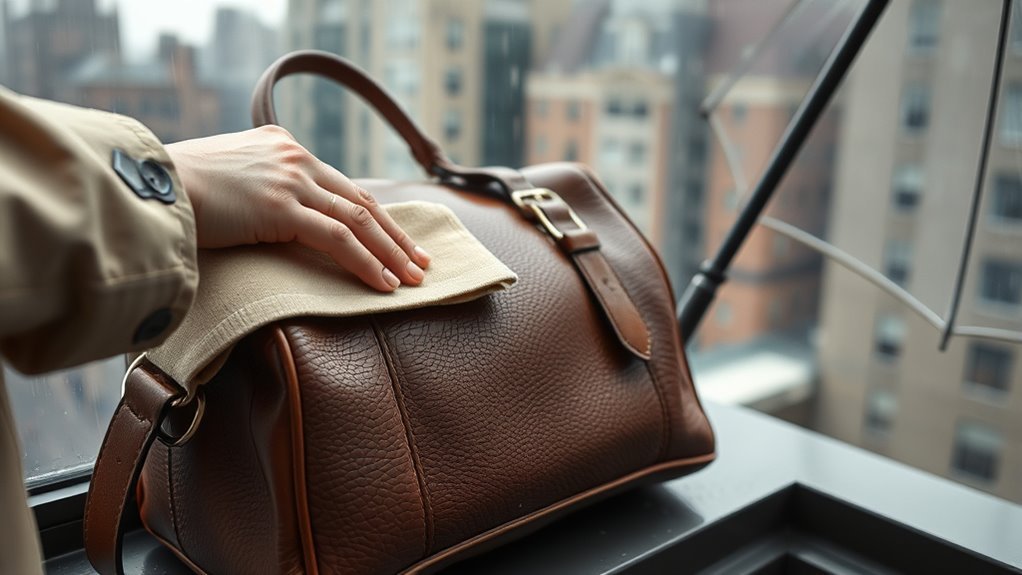
To protect a leather bag from rain, clean it, condition it and then apply a water-repellent spray or wax cream made for leather. Test the product on a hidden spot first, since some treatments darken leather. No treatment makes leather fully waterproof, so shield the bag with an umbrella or a cover in heavy rain. If the bag does get wet, blot it, let it dry at room temperature away from heat and condition it once it is dry.
Identify the Vulnerabilities of Leather Bags
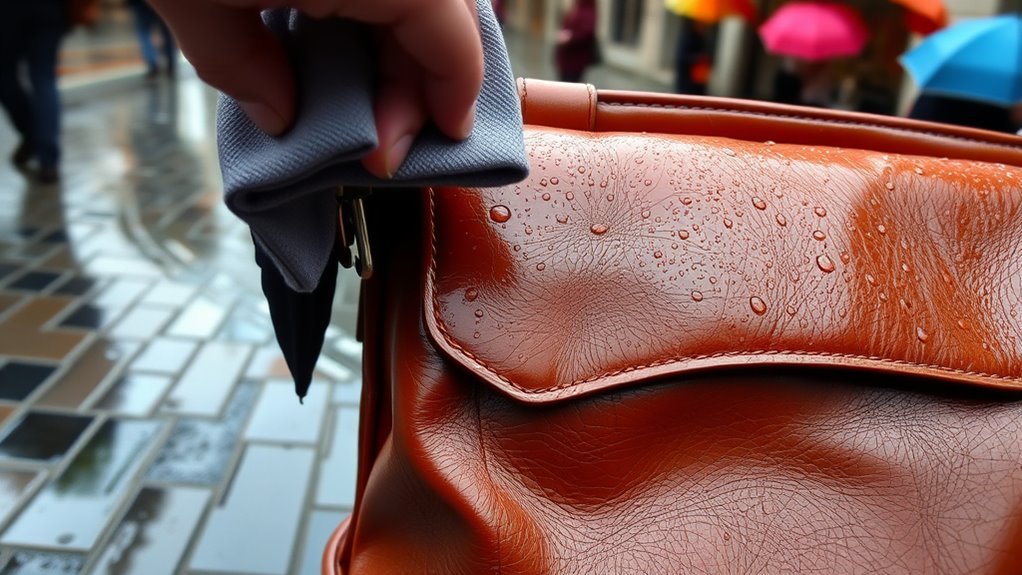
Leather is porous, so it absorbs water. How much depends on the type and finish. Coated and pigmented leathers resist light rain fairly well. Aniline and vegetable-tanned leathers absorb water quickly, and suede and nubuck are the most vulnerable.
Seams, edges and stitch holes are weak points. Water gets in there more easily than through the surface, and it can reach the lining and any stiffening inside.
When untreated leather gets wet, it darkens, and it can dry with spots or rings. Water also draws out the natural oils as it evaporates, which leaves the leather stiff. Repeated soaking can lead to cracks and mold.
A water-repellent treatment slows absorption and makes water bead on the surface. Regular conditioning, about every 3 to 6 months, keeps the leather supple, so it copes better when it does get wet.
Best Products to Protect Leather Bags From Rain
Two types of product protect leather from rain: sprays and wax creams. The right one depends on the leather.
Here are some of the best options:
- Water-repellent sprays: A leather protector spray leaves a thin, invisible barrier that makes water bead. It is the easiest choice for most smooth leather. For suede and nubuck, use a spray made for suede.
- Wax creams: A beeswax-based cream adds a stronger water-resistant layer to smooth leather. It can darken the color slightly, and it must not be used on suede or nubuck.
- Reapplying: Follow the label. As a guide, reapply every few months, and sooner in a rainy season or when water stops beading.
- Always patch test new products on a hidden area to verify they won’t alter the leather’s color or texture.
Check that the product suits your leather type and color before you buy. If the maker of your bag recommends a product, use that.
Key Steps to Protect Leather Bags Before Rain
Treat the bag before the wet season, not on the morning it rains. The treatment needs time to dry.
First, wipe the bag with a dry or slightly damp microfiber cloth to remove dust and surface dirt. A protector will not bond well to a dirty surface.
Next, condition smooth leather with a thin coat of leather conditioner and let it absorb. Supple leather copes better with water. Skip this step for suede and nubuck.
Then apply the water repellent and let it dry fully before you use the bag. Drying usually takes a few hours, and some products need overnight. Follow the label.
Reapply when water stops beading on the surface. For most bags that means every few months, and more often in a rainy season.
On wet days, add simple protection. Carry an umbrella, tuck the bag under your coat or arm in a downpour, and keep a small cloth in the bag to blot drops. A foldable rain cover or a spare tote also works in heavy rain.
Application Techniques for Optimal Protection
Good application matters as much as the product. Thin, even coats protect better than one heavy coat.
Always start with a clean, dry bag and a patch test.
Work in a well-ventilated space and let the bag dry naturally between coats.
Preparation Steps
Empty the bag and wipe it with a microfiber cloth. Use a leather cleaner if the surface is dirty, and let it dry.
Test the product on a hidden area, such as the base or inside a flap. Wait until it dries, and check for darkening or a change in texture. Then follow these steps:
- Choose a suitable waterproofing product based on the leather type.
- Apply the treatment in light, even coats from about 6 to 8 inches (15 to 20 cm) away.
- Cover the whole surface, including seams and edges, but do not soak it.
- Allow it to dry naturally, away from direct sunlight or heat.
Do not forget the seams, edges and base, where water gets in first. Keep the product off the hardware if the label says so.
Application Methods
The method depends on whether you use a spray or a wax.
For a spray, hold the can about 6 to 8 inches (15 to 20 cm) from the bag and apply a light, even mist. Do not soak the leather. Two thin coats are better than one heavy coat.
For a wax cream, put a small amount on a soft cloth and rub it in with circular motions. Pay attention to seams and edges. Buff off the excess with a clean cloth. Wax is for smooth leather only, and it can darken light colors.
Let the bag dry completely in a ventilated room, away from direct sun, radiators and hair dryers. Heat dries out leather and can make it crack.
Repeat the treatment when water no longer beads, and after any deep clean.
What to Do When Your Leather Bag Gets Wet
If your bag gets wet, act soon. Water that dries quickly and unevenly is what leaves marks. Follow these steps:
- Blot Excess Water: Use a soft, absorbent cloth to gently blot away any moisture immediately.
- Dry naturally: Let the bag dry at room temperature in an airy spot, away from direct sun, heaters and hair dryers.
- Maintain shape: Empty the bag and stuff it with plain paper or a dry towel while it dries. Avoid newspaper, since the ink can transfer.
- Condition After Drying: Once fully dry, apply a quality leather conditioner to restore moisture and flexibility.
Do not rub the wet surface, and do not use a hair dryer or put the bag near a heater. If rings or spots remain after drying, they can often be evened out. Our guide to removing water stains from a leather bag explains how.
Once the bag is dry and conditioned, apply the water repellent again, since soaking wears the old layer away.
Maintaining Your Leather Bag’s Condition Over Time
Rain protection lasts longer on leather that is cared for. Condition smooth leather every 3 to 6 months.
Top up the water repellent every few months, or when water stops beading.
Store the bag dry, in a breathable dust bag, and never put it away damp.
Regular Conditioning Schedule
Conditioning replaces the oils that leather loses over time and after wetting. It keeps the leather flexible and helps prevent cracks.
A simple routine is enough:
- Condition smooth leather every 3 to 6 months.
- Use a conditioner made for leather, in a thin coat, and buff off the excess.
- Condition again after the bag has been soaked and has dried fully.
- Do not use conditioner or wax on suede or nubuck. Use a suede protector spray instead.
Effective Waterproofing Techniques
Leather is durable, but it stays in better condition when water does not soak in. Clean the bag, patch test the product and apply it in thin coats. Remember that a treated bag is water-resistant, not waterproof. The table sums up the steps.
| Step | Action |
|---|---|
| 1. Clean the Bag | Remove dirt and oils |
| 2. Patch Test | Test on a hidden spot and check for color change |
| 3. Apply Treatment | Use a protector spray or wax cream in thin coats |
| 4. Store Properly | Use breathable dust bags |
Avoid home remedies such as cooking oils or petroleum jelly. They can darken leather and leave it greasy, and they do not give lasting protection.
Frequently Asked Questions
Is 100% Leather Waterproof?
No. Leather is porous and absorbs water. A spray or wax makes it water-resistant, so light rain beads on the surface, but no treatment makes it fully waterproof.
Can I Use My Leather Bag in the Rain?
Yes, in light rain, if the leather is treated. Blot drops as soon as you can and let the bag dry naturally. In heavy rain, cover the bag or carry a different one. Keep suede and nubuck out of the rain where possible.
How Do You Dry a Wet Leather Bag?
Blot the water with a soft cloth, empty the bag and stuff it with plain paper or a dry towel to hold the shape. Let it dry at room temperature, away from sun and heaters. Condition it when it is fully dry.
Does Rain Ruin a Leather Bag?
One shower will not ruin a leather bag if you dry it properly. Damage comes from repeated soaking, fast drying with heat or putting the bag away damp, which can cause stiffness, stains and mold.
Conclusion
A leather bag can cope with rain if you prepare it. Clean and condition it, apply a water repellent in thin coats and renew it when water stops beading. In heavy rain, shield the bag. If it gets wet, blot it, dry it slowly and condition it afterward.

