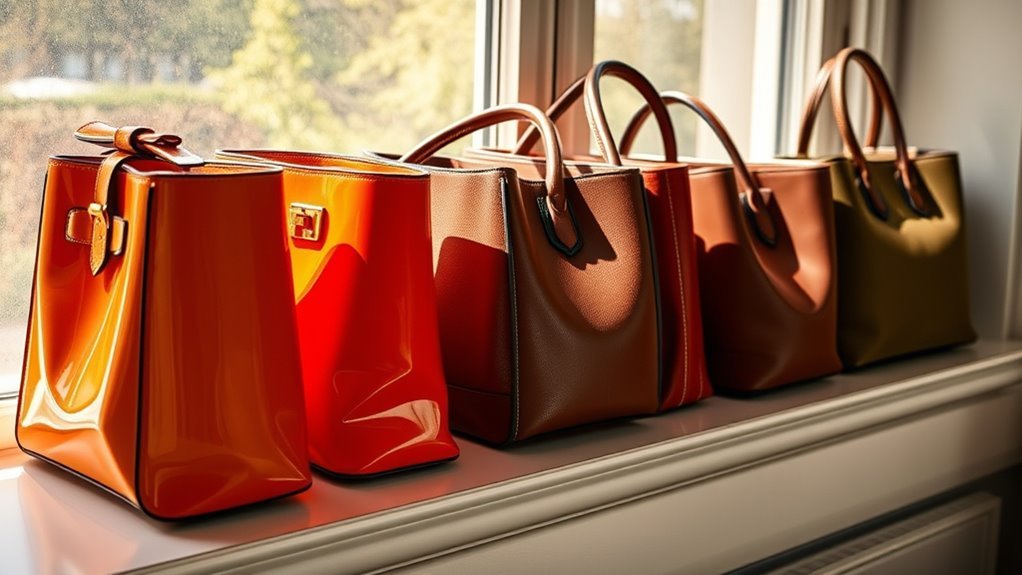
Sunlight fades handbag colors and wears down surface finishes. Ultraviolet (UV) rays and strong visible light break down dyes, so colors turn paler or shift in tone. Heat from the sun also dries leather and can make coatings crack or peel. Aniline leather, suede, nubuck and natural fabrics fade fastest, while pigmented leather and most synthetics hold color longer. Light damage builds up over time and cannot be fully reversed, so prevention matters most.
What UV Damage Means for Your Handbag

Sunlight contains ultraviolet (UV) radiation, visible light and heat. All three affect a handbag. UV and bright visible light break the chemical bonds in dyes, which is why colors fade. This process is called photodegradation.
Light and heat also affect the material itself. Leather loses moisture and oils and becomes stiff. Plastics and coatings turn brittle. Fabrics weaken as their fibers break down.
The damage is cumulative. A few minutes in the sun does little, but hours every day on a windowsill or a car seat add up. Faded dye does not come back when the bag is moved into the shade.
Some materials are much more sensitive than others, so it helps to know what your bag is made of.
How Materials Respond to Sunlight
Each material reacts to sunlight in its own way.
Dyed materials with no protective coating fade fastest. Coated and pigmented surfaces last longer.
The sections below explain the main effects.
UV Exposure Effects
Aniline leather, suede and nubuck have little or no protective coating, so their dye fades quickly. Pigmented leather has an opaque color coat on top and holds its color much better. Undyed vegetable-tanned leather behaves differently: it darkens in the light and develops a patina. Among fabrics, cotton, linen and silk fade and weaken, and nylon loses strength with long UV exposure. Polyester resists UV better. The table gives a summary.
| Material Type | UV Impact |
|---|---|
| Leather/Synthetic | Fading, loss of vibrancy |
| Metallic Finishes | Dullness, foil deterioration |
| Natural Fibers | Discoloration, weakening |
Coated materials have their own problems. Polyurethane (faux leather) and patent finishes can yellow, turn sticky or crack with heat and light. Metallic and foil finishes dull and can flake.
Color Fading Mechanisms
Fading depends on three things: the material and its dye, the color, and how long the bag is exposed.
- Material Sensitivity: Natural fibers like cotton and linen fade more rapidly than treated synthetics.
- Color: Bright, saturated shades often show fading first. Dark colors can shift in tone, for example black leather that turns brownish or greenish.
- Exposure Duration: Prolonged, direct sunlight accelerates fading, making it important to limit exposure.
Signs Your Handbag Has Been Sun-Damaged
Sun damage shows up in a few typical ways. The first is uneven color. The side that faced the window is paler than the back, the base or the area under a flap or strap.
The second is a change in feel. Leather becomes dry, stiff or finely cracked. Faux leather and coated fabrics may feel tacky at first, then turn brittle and start to peel.
Metallic, patent and light-colored finishes show damage clearly. Look for dull patches, yellowing or flaking.
Compare exposed areas with hidden ones, such as the inside of a pocket or the underside of a flap. The difference shows how much the color has changed.
Preventing Further Sun Damage
You cannot undo light damage, but you can stop it from getting worse.
The basic rule is simple: keep bags out of direct sun when you are not carrying them.
Good storage does most of the work. Protective products add a little extra.
Effective Storage Solutions
Where you keep your bags matters more than anything else.
Follow these three rules:
- Store handbags in dust bags or boxes designed from protective materials to shield them from direct sunlight.
- Maintain a cool, dry environment to mitigate the effects of humidity and heat on materials.
- Keep bags off open shelves that face a window, or cover them.
Protective Products
Some leather and fabric protector sprays include UV inhibitors. They can slow fading, but they do not block it, and they wear off. Test any spray on a hidden spot first, and use only products made for your material.
Conditioning does not stop fading, but it replaces the oils that heat and sun draw out of smooth leather. Condition every 3 to 6 months. Do not use conditioner on suede or nubuck.
If you display bags on open shelves, keep the shelves away from windows. Sunlight through glass still fades color, because ordinary window glass lets visible light and most UVA through. Curtains, blinds or UV-filtering window film reduce the exposure.
Top Storage Tips for Sunlight Protection
A closet or a closed cabinet is the best place for handbags. If that is not possible, these steps help:
- Use opaque cotton dust bags, which keep light off the surface.
- Turn or move bags on display now and then, so one side does not take all the light.
- Install UV-blocking window films or curtains in storage areas to reduce sunlight penetration.
Keep bags away from radiators, heating vents and hot cars as well. Heat speeds up drying and makes coatings break down faster.
Ways to Bring Back Your Sun-Faded Handbag
A sun-faded bag can often be improved, though rarely made new again. The right method depends on the material.
On smooth leather, conditioning can deepen a color that looks dull and dry. Recoloring products can restore lost color.
For valuable bags or large faded areas, a professional restorer gives the best result.
Condition Regularly
Start with the gentlest step. Dry leather looks paler than it is, and conditioning alone can bring some depth back.
Clean the leather first, then apply a thin coat of leather conditioner and buff it. Expect a modest improvement. Conditioner cannot replace dye that has faded.
Consider these strategies:
- Condition smooth leather every 3 to 6 months with a conditioner made for leather.
- For fabric bags, use a mild soap solution for spot cleaning, ensuring you test in an inconspicuous area first.
- Keep the bag in a dust bag, away from light, between uses.
Fabric bags are harder to restore. Faded canvas or nylon can only be re-dyed, which works best on natural fibers and is hard to do evenly.
Use Color Restorers
Leather recoloring balms and creams add pigment to faded leather. Choose a shade that matches the unfaded areas, and test it on a hidden spot. Apply thin layers with a sponge or cloth and let each one dry. These products work best on absorbent leathers and on light, even fading. They are not suitable for suede, nubuck or coated fabrics. Fresh color can rub off onto clothes until it has cured, so buff the surface well.
Professional Restoration Services
A professional leather restorer can clean, re-dye and refinish a bag. This is the best route for expensive bags, strong color loss or delicate finishes.
- Professionals assess damage early to prevent further deterioration.
- Color restoration techniques, like dyeing or toning, match your handbag’s original shade.
- Qualified services improve the longevity of your handbag, ensuring it retains functional integrity.
Ask for a quote first, since full recoloring can cost a large part of the price of a mid-range bag.
Select Handbags That Resist Sun Damage
If you live in a sunny climate or carry a bag outdoors every day, choose materials that hold their color. Pigmented and coated leathers, coated canvas and polyester fade slowly. Aniline leather, suede, nubuck, straw and brightly dyed cotton fade faster. Mid-tone and neutral colors hide gradual fading better than very bright or very dark ones.
Grained and textured finishes also hide small changes better than smooth, glossy ones.
Seasonal Care Tips for Handbags
Sun exposure changes through the year, so adjust your habits a little each season:
- Summer: Keep bags out of parked cars and off sunny windowsills. Wipe off sunscreen and sweat, which can mark leather.
- Winter: Low sun through a window still fades color. Keep bags away from radiators, which dry leather out.
- Storage: Store out-of-season bags stuffed with acid-free tissue, in dust bags, in a dark, dry closet.
When you swap bags for the season, check each one in daylight for fading, dryness or stiffness before you put it away.
The Impact of Design on Sun Damage
The design of a bag affects how sun damage shows. On a single-color bag, slow fading is hard to notice. On a bag with panels, flaps or straps, protected areas keep their color while exposed ones fade, and the contrast gives the damage away.
Finish matters too. Glossy patent and metallic finishes show dull patches and yellowing clearly. Matte and grained finishes hide them better.
Mixed materials age at different rates. A canvas body may fade while undyed leather trim darkens, which changes the look of the whole bag.
Clear protective top coats also wear down in the sun. Once they do, the color underneath fades faster.
None of this means you should avoid a design you like. It simply helps you know where to look for early signs.
When to Get Professional Repair Help
Home care has limits. Some damage needs a professional.
Strong or patchy fading on leather usually needs re-dyeing to look even. Deep cracks mean the leather fibers have broken, which conditioner cannot repair.
Consider seeking help if you notice:
- Brittle corners or edges that affect structural integrity
- Persistent discoloration or uneven patches beyond cleaning’s reach
- Peeling or flaking of a coated or metallic finish
A restorer can tell you what is realistic. Faded color can usually be corrected. Cracked or peeling surfaces are much harder to fix.
Frequently Asked Questions
Can Sun-Faded Leather Be Restored?
Partly. Conditioning improves leather that looks dull and dry, and recoloring balms or professional re-dyeing can bring back color. The original finish cannot always be matched exactly, and cracks are permanent.
Does Sunlight Through a Window Fade Handbags?
Yes. Ordinary window glass lets through visible light and most UVA, both of which fade dyes. A bag displayed near a sunny window will fade over months, mostly on the side that faces the glass.
Is It Bad to Leave Leather in the Sun?
Yes, for long periods. Sun fades the dye and dries the leather, which can lead to stiffness and cracks. Normal use outdoors is fine. The damage comes from hours of direct sun, day after day.
Which Handbag Materials Fade the Least?
Pigmented leather, coated canvas and polyester hold color best. Aniline leather, suede, nubuck and natural fabrics such as cotton and linen fade fastest.
Conclusion
Sunlight slowly fades handbag colors and dries or cracks their finishes, and the damage adds up over time. Store bags in dust bags, away from windows, heat and parked cars. Condition smooth leather a few times a year. If a bag has already faded, conditioning or recoloring can help, and a restorer can handle the rest.
Sources: Leather Dictionary: light fastness of leather, Museums and Galleries of NSW: preservation of historic leather.

