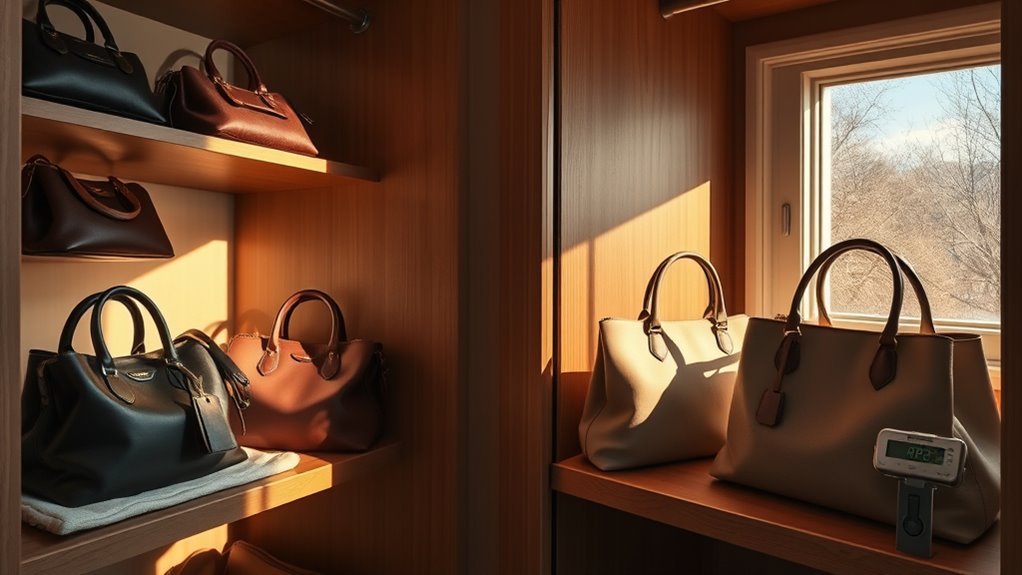
Humidity affects handbags in both directions. Damp air, above about 60 percent relative humidity, lets mold grow, leaves a musty smell, tarnishes hardware, and makes leather stretch and sag. Very dry air pulls moisture out of leather until it stiffens and cracks. The safe middle for storage is about 40 to 55 percent. In daily use, the main rule is to dry a damp bag fully before you put it away.
Identifying Humidity Risks to Your Leather Handbags
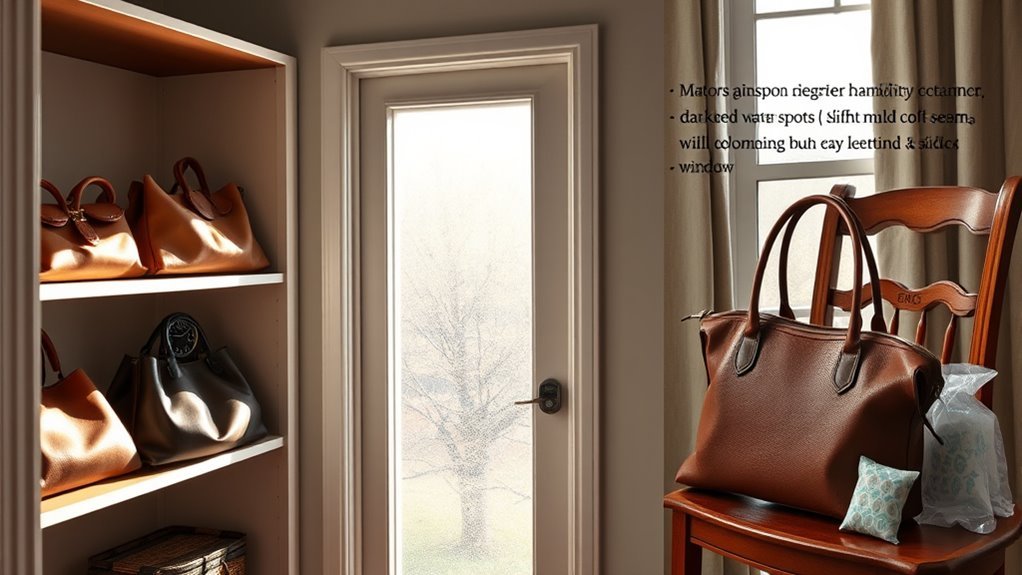
Leather is skin, and it takes up and gives off moisture with the air around it. In damp air it absorbs water, softens, and can stretch or sag under its own weight.
When the air stays above about 60 percent relative humidity, mold and mildew can grow on leather, linings, and canvas. You see it as white, green, or gray fuzzy spots, and you smell it as a musty odor that is hard to remove.
Damp leather also stains more easily. Water marks, dark patches, and dye transfer from clothes are all more likely when the surface is moist.
Metal hardware suffers too. Moist air speeds up tarnish on zips, clasps, and chains, and can lift thin plating over time.
Dry air is the opposite problem. In very dry rooms, leather loses its natural moisture and oils, and it can stiffen and crack along folds and handles. So aim for a steady 40 to 55 percent. A small hygrometer in the closet shows where you stand.
Other materials react in their own ways. Canvas and fabric linings mildew. Suede stiffens and spots. Faux leather made with polyurethane can turn sticky or peel after long exposure to heat and humidity. Straw and raffia go moldy when damp and brittle when too dry.
How Humidity Affects Handbags in Daily Use
Storage is only half the story. A bag picks up moisture every day, from rain, from sweat on handles and straps, and from humid air on the commute. None of that is a problem if the bag dries out afterward.
After a wet or muggy day, empty the bag and wipe it with a dry cloth. Leave it open in a room with moving air overnight. Do not put a damp bag straight into a dust bag or a closed closet. Do not dry it with a hot hair dryer or on a radiator, because fast heat makes leather stiff.
Avoid leaving a bag in a parked car or a steamy bathroom. Heat and humidity together do the most damage, especially to faux leather and glued parts. In very humid weather, rotate your bags, so each one gets a day or two to air between uses.
How to Keep Your Handbags Safe From Humidity
A few habits keep moisture under control at home:
- Store handbags in a cool, dry environment with humidity at about 40 to 55 percent.
- Use breathable fabric dust bags instead of plastic for better air circulation.
- Place silica gel packets inside storage areas to absorb excess humidity.
- Regularly check your handbags for signs of moisture, discoloration, or odors, addressing any issues immediately.
- Avoid overstuffing bags during storage to maintain their shape and prevent creasing.
Identifying and Solving Humidity Issues for Leather Handbags
Check your bags regularly, so you catch a problem early. Dark marks, a musty smell, a tacky surface, or white spots all point to moisture.
The table matches common signs with a fix:
| Signs of Humidity Issues | Solutions | Prevention Tips |
|---|---|---|
| Mold growth | Wipe off outdoors, then use a leather cleaner | Use silica gel packets |
| Musty smell | Air out the handbag | Store in breathable bags |
| Stains | Clean, dry fully, then condition | Guarantee proper ventilation |
| Stretching | Avoid overstuffing | Regularly check storage |
| Sagging | Reshape while stored | Keep in a cool area |
If you find mold, take the bag outdoors before you wipe it, so spores do not spread indoors. Keep it apart from your other bags until it is clean and dry. Then fix the cause, which is usually a damp closet.
Smart Storage Tips for Humid Weather
Humid seasons call for a little more care. These steps help:
- Store handbags in a cool, dry place with humidity at about 40 to 55 percent.
- Use breathable fabric dust bags instead of plastic to allow air circulation.
- Incorporate moisture absorbers like silica gel packets to combat excess humidity.
- Avoid stacking bags too closely. This guarantees proper airflow.
- Regularly check stored handbags for signs of dampness or odors.
If your home stays humid for weeks at a time, a dehumidifier near the closet is the most reliable fix.
Long-Term Care Strategies for Handbags in Humid Environments
If you live in a humid climate, treat moisture control as routine. Keep the storage area at about 40 to 55 percent, and never let it sit above 60 percent for long.
Keep silica gel packets in each bag and on the shelf, and replace or dry them out when they stop working. Condition leather every 3 to 6 months. Clean it first, and let the conditioner dry before the bag goes back into storage.
Store bags in breathable cotton dust bags, not plastic, with space between them for air. Wipe them with a soft, dry cloth now and then, and deal with spills right away.
Frequently Asked Questions
What Is the Ideal Humidity Level for Storing Leather?
About 40 to 55 percent relative humidity is a good target. Above 60 percent, mold becomes a risk. In much drier air, leather can dry out and crack.
What Is the Best Way to Store Handbags?
Store them clean and dry, in breathable dust bags, standing upright on a shelf. Stuff them lightly with acid-free tissue, keep them out of sunlight, and check them every month or so.
How Should I Store My Designer Handbags?
The same way, with a little more attention. Keep the room at steady temperature and about 40 to 55 percent humidity. Use the dust bag that came with the bag, stuff it with acid-free tissue, and wrap chains or hardware in tissue so they do not mark the leather.
Should Handbags Be Stored in Dust Bags?
Yes. A cotton or flannel dust bag keeps off dust and light while letting air through. Do not use plastic bags, which trap moisture.
Conclusion
Humidity harms handbags at both extremes. Too much brings mold, odor, and sagging. Too little dries and cracks leather. Keep storage at about 40 to 55 percent, let bags dry fully after damp days, and check them regularly.
Sources: U.S. EPA: Mold and moisture guidance.