
To remove ink from a leather purse without causing more damage, blot the mark at once with a dry cloth and do not rub. On finished leather, dab the mark with a cloth dampened with a leather cleaner or mild soapy water, working from the edge toward the center. A leather ink remover is the next step. Avoid hairspray, nail polish remover, baking soda and melamine sponges, which strip the finish. On suede, nubuck and aniline leather, ink soaks in at once, so take the bag to a specialist.
What Type of Leather Is Your Purse?
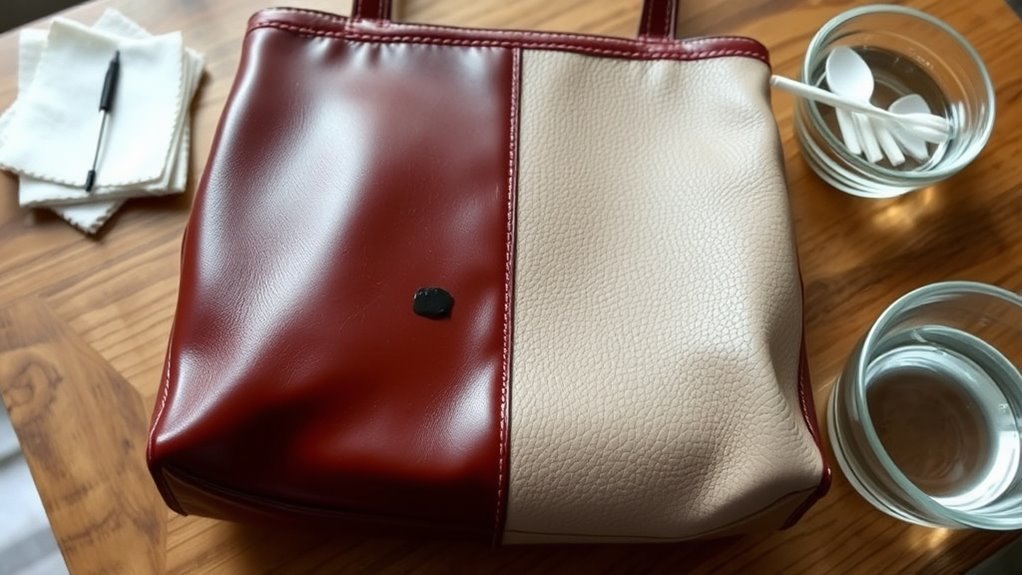
The right method depends on the type of leather, so identify it before you touch the stain.
Finished leather, also called pigmented or protected leather, has a colored coating on the surface. It looks even in color and feels smooth or lightly pebbled. Most handbags are made of it. Aniline leather has little or no coating, so you can see the natural grain and small marks in the hide. Suede and nubuck have a soft, brushed surface.
A drop of water on a hidden spot will tell you which type you have. If the drop beads and sits on the surface, the leather is finished. If it soaks in and darkens the spot within a few seconds, the leather is absorbent.
On finished leather, ink sits mostly on the coating, so there is a fair chance of lifting it at home. On absorbent leather, the ink travels into the fibers along with any liquid you add.
Faux leather is a plastic coating on fabric. It tolerates mild soap and water well, but solvents can dull or soften the surface, so test them first.
If you are not sure what you have, treat the bag as delicate and use only the gentlest methods.
Immediate Actions to Take After an Ink Spill
Fresh ink is much easier to remove than dried ink, so act quickly.
Take the pen out of the bag, and check that it is not still leaking onto the lining.
Then blot the mark and test your cleaner on a hidden spot before you treat the stain.
Work slowly. Most damage comes from rubbing hard or reaching for a strong solvent too soon.
Blotting the Ink Stain
Blotting removes the wet ink that has not yet sunk in.
Press a clean, dry, white cloth or paper towel straight down on the mark and lift it off. Do not rub or wipe, since that spreads the ink over a larger area and pushes it into the grain.
Move to a clean part of the cloth each time, so you do not put ink back. Keep going until no more ink transfers.
Do not wet the mark at this stage. Water can spread fresh ink, and on absorbent leather it leaves a ring.
Swift action can make all the difference.
Testing Cleaning Methods
Every leather finish reacts differently, so always test first.
Choose a hidden spot, such as the underside of a flap or the base. Dab on a little of the cleaner with a cotton swab, wait a minute and blot with a white cloth. Then let the spot dry.
If color comes off on the cloth, or the spot turns dull, sticky or lighter, do not use that product on the stain.
If the test is clean, treat the ink in the same way, a little at a time.
Effective Home Remedies for Ink Removal
Start with the mildest method and move up only if it does not work.
Many popular home remedies do more harm than good on leather, so choose carefully.
The options below are listed from the gentlest to the strongest.
Recommended Cleaning Solutions
These methods are for finished leather only.
First, try a leather cleaner or a drop of mild, pH-neutral soap in water. Dampen a soft cloth, wring it out well and dab the mark, working from the outside toward the center. Blot dry with a clean cloth.
If the mark remains, use a leather ink remover. These come as sticks or liquids made for finished leather. Follow the instructions, and work on the ink line only.
Rubbing alcohol is often recommended, and it does dissolve ballpoint ink. It also dissolves leather dye and finish, so treat it as a last resort on finished leather only. Put a very small amount on a cotton swab, touch only the ink, roll the swab instead of rubbing, and change swabs as they pick up color. Stop as soon as the color of the leather starts to lift.
Wipe the area afterward with a cloth dampened with clean water, and let it dry naturally.
Do not use hairspray, nail polish remover, bleach, hydrogen peroxide, vinegar, baking soda or melamine sponges. They strip, bleach or scratch the finish, and the patch they leave is harder to fix than the ink.
How to Use Leather Cleaners Effectively
A leather cleaner is the safest product to start with, and the way you apply it matters.
Follow these steps:
- Choose a cleaner specifically formulated for your leather type to avoid damage.
- Apply the cleaner to a soft, lint-free cloth, not directly onto the leather, to control saturation.
- Gently blot the ink stain with the cloth using a dabbing motion. Avoid rubbing to prevent spreading.
- Always test the cleaner on an inconspicuous area first to check for adverse reactions.
- Follow up with a leather conditioner to restore moisture and protect against future stains.
When to Seek Professional Cleaning Services
Some ink stains should not be treated at home at all. A leather specialist has solvents and color-matching products that are not sold to the public, and can recolor the area if needed.
Consider reaching out for help if:
- The ink stain persists after multiple attempts.
- Your purse is made of high-quality leather, like aniline or vegetable-tanned leather.
- The leather is light-colored or delicate, where discoloration may occur.
- There’s significant discoloration or damage from previous cleaning attempts.
- You own a vintage or designer purse, where value and integrity are at stake.
Stop home treatment as soon as you see the color of the leather change. A specialist can deal with an ink mark far more easily than with a bleached or roughened patch.
Old ink that has set into the finish often cannot be removed completely. In that case, a specialist can cover it by recoloring the area.
Prevent Future Ink Stains on Leather
Most ink stains come from pens carried loose in the bag, so prevention is simple.
Keep pens in a zipped pouch or pen case, with the caps on or the tips retracted. Check them now and then, since heat and pressure can make ballpoints and gel pens leak.
A leather protector spray makes finished leather a little easier to clean. It does not make leather ink-proof.
A light-colored lining shows ink at once, so look inside the bag regularly and deal with marks early.
Condition smooth leather every 3 to 6 months. Leather in good condition has a sounder finish, which gives ink less chance to sink in.
These habits take little effort and prevent most ink accidents.
Caring for Leather After Ink Removal
Cleaning removes some of the oils and finish from the leather along with the ink, so the area needs care afterward.
Follow these conditioning techniques to guarantee longevity:
- Apply a high-quality leather conditioner to restore natural oils.
- Make sure the leather is completely dry before conditioning to avoid trapping moisture.
- After that, condition the purse every 3 to 6 months.
- Regularly inspect for signs of wear or new stains to address issues promptly.
- Store your purse in a cool, dry place, away from direct sunlight.
Top Mistakes to Avoid When Removing Ink From Leather
Most ink disasters on leather are caused by the cleaning, not by the ink. The table lists the mistakes to avoid.
| Mistake | Consequence |
|---|---|
| Using harsh chemicals | Discoloration and damage to leather finish |
| Rubbing aggressively | Spreading ink and damaging the surface |
| Applying baking soda paste | Scratching and harming the leather |
| Over-conditioning post-cleaning | Greasy appearance and compromised texture |
| Neglecting patch test | Unforeseen adverse reactions |
Use soft white cloths, cotton swabs and products made for leather, and be patient. A faint mark that remains is better than a damaged finish.
Frequently Asked Questions
How Do You Remove Ink From Leather Without Damaging Leather?
Blot the fresh ink with a dry cloth, then dab finished leather with a leather cleaner or mild soapy water. Use a leather ink remover if needed, and condition the area afterward. Take suede, nubuck and aniline leather to a specialist.
Will a Magic Eraser Remove Ink From Leather?
It is not a good idea. A melamine sponge works like very fine sandpaper, so it removes the finish of the leather along with the ink and leaves a dull, lighter patch.
How Can I Remove Ballpoint Pen Stains From Leather?
Blot first, then dab with a leather cleaner on a damp cloth. For a stubborn line on finished leather, use a leather ink remover. Rubbing alcohol on a cotton swab is a last resort, because it can lift the color.
Does Vinegar Remove Ink From Leather?
Not reliably. Vinegar is a weak solvent for ink, and its acidity can dull or mark the finish. A leather cleaner or ink remover is a safer choice.
Conclusion
Ink on a leather purse is best treated early and gently. Identify the leather, blot the mark and begin with the mildest cleaner. Avoid strong solvents and abrasive tricks, and stop if the color starts to lift. Condition the leather afterward, and leave absorbent leathers and stubborn stains to a specialist.

