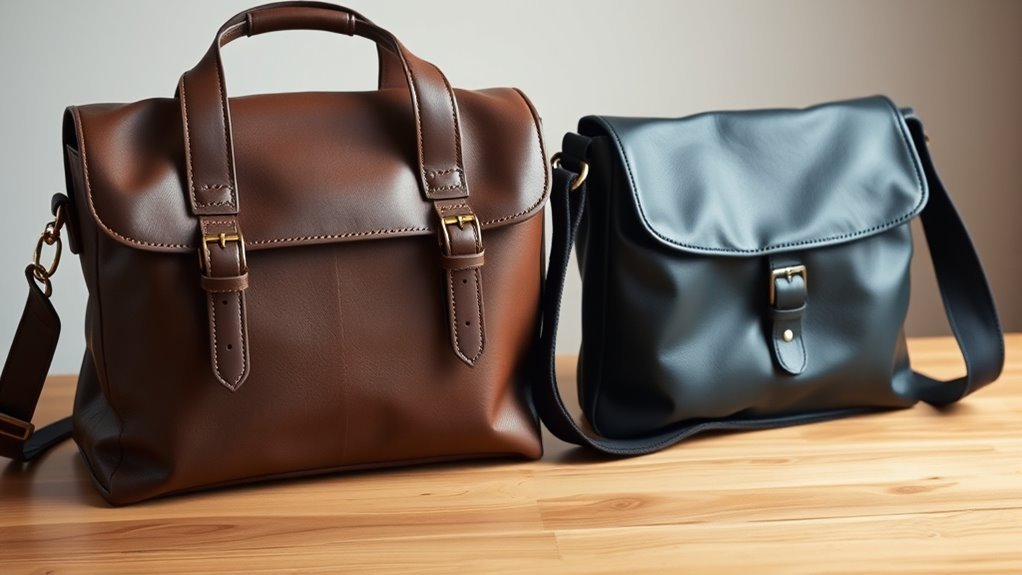
A satchel is a structured bag with a flat base, a top handle, and usually a long strap as a second option. A messenger bag is a soft, flat bag with a wide flap and one long strap worn across the body. So the satchel holds its shape and looks formal, while the messenger sits against your back or hip and keeps your hands free. The sections below compare structure, straps, access, and capacity.
What Defines a Satchel Bag?
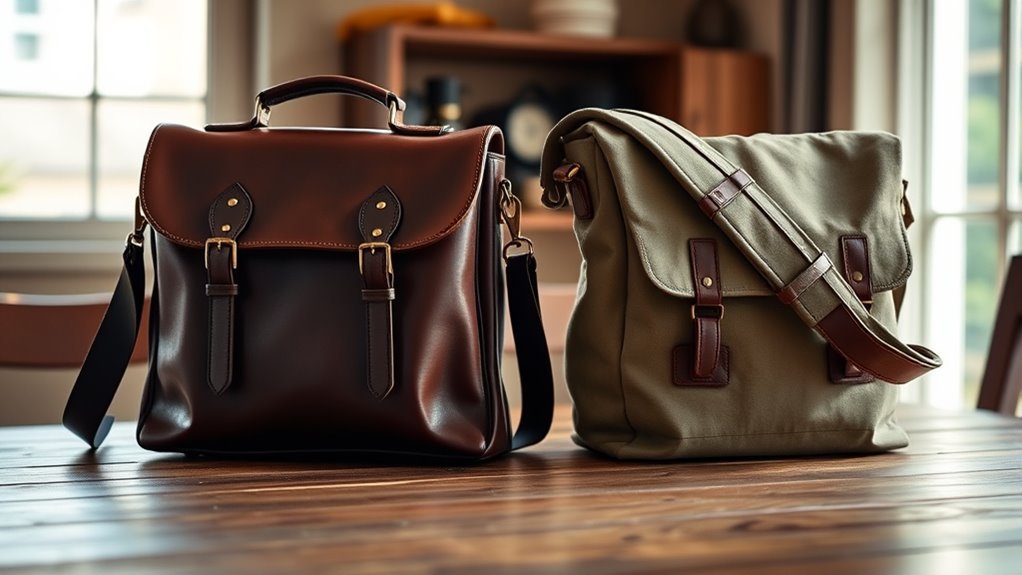
A satchel is a rectangular bag with firm sides and a flat bottom, so it stands up on its own. Classic satchels close with a front flap and buckles. Many modern ones close with a zip at the top.
It has two ways to carry: a top handle for the hand or forearm, and often a long strap that clips on for the shoulder or across the body.
Leather is the traditional material. Full-grain leather darkens and softens with use. Inside, there are usually a few pockets or dividers for papers, a tablet, and small items.
The firm shape makes a satchel look neat and professional. That is why it is common in offices and at meetings.
What Makes a Messenger Bag Unique?
A messenger bag is wider than it is tall, with a soft body and a large flap that covers the whole front. The style is closely tied to bike couriers, who need to reach inside without taking the bag off.
It hangs from one long strap worn across the chest, with the bag resting on the lower back or hip. The main compartment is one roomy space, often with a padded laptop sleeve.
Common materials are waxed canvas, nylon, and leather. Canvas and nylon are light and shed rain well, though few are fully waterproof. The soft body lets the bag curve against you, which is comfortable on a walk or ride.
The look is casual. Messenger bags are popular with students, cyclists, and people in relaxed workplaces.
How Are Satchels and Messenger Bags Structured Differently?
The two bags differ in shape, closure, and depth.
Shape: a satchel is boxy and firm. It keeps its outline whether it is full or empty.
A messenger bag is flatter and softer. It slouches when you put it down and bulges when it is overfilled.
Closure: classic satchels use buckles or a turn lock, and many have a zip under the flap.
Messenger flaps close with clips, magnets, or hook-and-loop strips, so they open fast with one hand.
Depth: a satchel is usually deeper from front to back, so it takes books, a lunch box, or a folded sweater.
A messenger bag is slimmer and suits flat items, such as a laptop, folders, and a charger.
In short, the satchel protects and organizes, and the messenger flexes and opens fast.
Strap Designs of Satchels vs. Messenger Bags: Impact on Carrying Styles
Straps are the other big difference, and they change how each bag feels in use.
A satchel is mainly a hand-carried bag, and its long strap is an extra. A messenger bag usually has no real top handle, and its single wide strap does all the work.
That shapes the look too. A satchel in the hand looks formal. A messenger across the chest looks casual and ready to move.
Strap Length Variations
Strap length and width differ between the two:
- Versatile Carrying: Satchels offer adjustable strap lengths, letting you customize for shoulder or hip carry, making the bag truly yours.
- Hands-free Functionality: Messenger bags feature a fixed or adjustable cross-body strap that sits lower, ideal for quick access during your busy day.
- Comfortable Load Distribution: Messenger bags often have wider, padded straps for even weight distribution, perfect for heavier loads on the go.
If you carry a heavy load for long stretches, strap width and padding matter more than anything else.
Carrying Position Flexibility
A satchel gives you more ways to carry: by the handle, on the forearm, on the shoulder, or across the body if the strap is long enough. A messenger bag is made for one position, across the body, though you can sling it over one shoulder for a short walk.
| Feature | Satchel | Messenger Bag |
|---|---|---|
| Strap Design | Top handle plus optional long strap | Cross-body strap |
| Movement Flexibility | Top handle or shoulder wear | Diagonal wear for cyclists |
| Weight Distribution | On one hand or shoulder | Spread across the torso |
If you change between walking, driving, and meetings in a day, the extra options of a satchel are useful.
Comfort and Stability
Comfort depends on the load and how far you carry it.
Here is how the two compare on a commute:
- Satchels: Long shoulder straps let you wear it on your shoulder or hip, but their structured design can feel stiff over time.
- Messenger Bags: The adjustable cross-body strap offers hands-free convenience, perfect for active lifestyles, minimizing movement while you bike or walk.
- Access: Messenger bags allow quick access to your essentials, while satchels often require you to unbuckle for that polished look.
For cycling, a messenger is the clear pick. Many have a second stabilizer strap that stops the bag from swinging around to the front.
Which Bag Offers Better Accessibility?
Messenger bags are quicker to get into. You swing the bag to your front, lift the flap, and reach in.
Satchels are slower, since you often have to set them down and undo a buckle or zip. In return, the contents are better protected.
Accessibility in Satchels
A satchel favors order over speed. Here is what that means in practice:
- Methodical Packing: Satchels promote organized packing, ensuring everything has its place.
- Flap Closure: You’ll need to open the flap to access items, which can slow you down.
- Security vs. Speed: While the buckles keep your belongings secure, they also impede quick retrieval.
This suits people who pack once in the morning and unpack at a desk.
If you reach into your bag many times on the move, it can feel slow.
Quick Access in Messenger Bags
A messenger bag is designed for access on the move. The flap lifts in one motion, and you do not need to take the bag off.
The wide opening makes it easy to slide a laptop or folder in and out. The strap lets you pull the bag around to your front on a train or at a counter.
Many have outside pockets for a phone and keys. The downside is security. A flap held by a magnet is easier for someone else to open than a buckled satchel.
Capacity Comparison: Satchel vs. Messenger Bag
Capacity depends on size, but the shape decides what fits well.
A satchel holds bulky items neatly because of its depth and firm sides. A messenger holds flat items well and stays slim against the body.
Here’s how they stack up:
- Satchel Depth: Usually deeper from front to back, with room for files and lunch.
- Messenger Slimness: Wider and flatter, ideal for laptops and chargers.
- Organization: Satchels provide compartments to keep your essentials neatly arranged, while messenger bags can feel slouchy when filled.
For papers, a tablet, and a tidy look, a satchel works well.
For a laptop, cables, and a jacket stuffed in at the last minute, a messenger is more forgiving.
Which Bag Suits Your Professional Needs?
For work, think about your dress code and what you carry.
A leather satchel fits a formal office. A messenger bag fits a casual or creative workplace and a bike commute.
Check that either bag fits your laptop. Measure the laptop and compare it with the inside dimensions.
Key Considerations for Professionals
Three points decide it for most people:
- Structure: Satchels provide a polished look and organizational compartments, making them perfect for professional settings. If you’re aiming for a sleek appearance, this is your go-to.
- Convenience: Messenger bags offer flexible interiors and easy access, ideal for those who need hands-free movement. Perfect for quick commutes!
- Bag Materials: Think about durability and style. Satchels often use premium materials that withstand daily wear, while messenger bags lean towards a more casual vibe.
If you are still unsure, let your commute decide.
Style and Image Impact
A bag is part of how you come across. A satchel looks polished and suits meetings and interviews. A messenger bag looks relaxed and practical.
| Bag Type | Image Perception |
|---|---|
| Satchel | Refined, traditional appearance |
| Messenger Bag | Casual, youthful, modern vibe |
Neither is wrong for work. A slim leather messenger can look smart, and a canvas satchel can look casual. Material and color matter as much as shape.
Functionality for Daily Tasks
Think through a normal day before you choose.
These points sum up how each bag handles daily tasks:
- Satchels: With a structured design, they secure documents and professional items, perfect for formal settings.
- Messenger Bags: Their flexible interiors allow easy access, making them ideal for on-the-go tasks and dynamic work environments.
- Carrying Style: Satchels prioritize professionalism with top handles and shoulder straps, while messenger bags offer hands-free movement with cross-body straps.
The best bag is the one that suits how you move, not only how you dress.
How Each Bag Shows Off Your Style
Style follows structure. The firm lines of a satchel look formal and classic.
A messenger bag looks casual. It comes in more colors and fabrics, which suits students and commuters.
Straps add to the effect. A top handle looks dressy, and a crossbody strap looks sporty.
Pick the one that matches most of what you wear in a week.
Essential Care Tips for Satchel and Messenger Bags
Both bags last longer with simple care. For leather ones, follow these basics:
- Regular Cleaning: Wipe down your bag with a dry or slightly damp cloth to remove dust and prevent buildup. This simple cleaning method keeps your leather glowing.
- Conditioning: Treat your leather to a conditioner every 3 to 6 months, or whenever it feels dry. This prevents cracking and maintains that desirable suppleness.
- Avoid Overstuffing: Leave some spare room in a satchel to preserve its shape, while overloading messenger bags can make them cumbersome.
If the bag gets wet in the rain, wipe it and let it dry at room temperature, away from heaters.
Light scratches on smooth leather often fade if you rub them gently with a clean fingertip. Canvas and nylon bags can be wiped with a damp cloth and mild soap.
How to Choose the Right Bag for Your Needs?
To choose, start with how you travel. If you walk or drive and carry the bag by hand, a satchel works well. If you cycle or take crowded trains, a messenger keeps your hands free.
Next, look at your load. Books, files, and a lunch box sit better in a satchel. A laptop, charger, and notebook fit a messenger.
Then think about setting. Satchels suit formal workplaces, and messengers suit casual ones.
Last, pick the material. Leather looks smart and lasts for years with care. Waxed canvas and nylon are lighter and handle rain better.
Try the bag on with your usual load if you can. Comfort over a full day matters more than looks on a shelf.
Frequently Asked Questions
What’s the Difference Between a Messenger Bag and Satchel?
A satchel is structured, has a top handle, and stands upright. A messenger bag is soft, has a wide flap, and hangs from one long strap across the body. Satchels look more formal. Messengers are faster to get into.
What Are the Key Differences Between a Messenger Bag and a Sling Bag?
A sling bag is smaller and sits high on the chest or back on a short strap. It holds only a phone, wallet, and keys. A messenger bag is larger, sits at the hip or lower back, and holds a laptop and papers.
What Are the Disadvantages of Using a Messenger Bag?
All the weight hangs from one shoulder, which can get tiring with a heavy load. The bag can swing forward when you bend or cycle. A flap closure is also less secure than a zip.
What Is the Difference Between a Satchel and a Crossbody Bag?
Satchel describes a shape: structured, with a top handle. Crossbody describes how a bag is worn: on a long strap across the body. A satchel with a long strap can be worn crossbody, so the two can overlap.
Conclusion
A satchel gives you structure, a top handle, and a formal look. A messenger bag gives you a soft body, a crossbody strap, and fast access. Match the bag to your commute, your load, and your workplace.