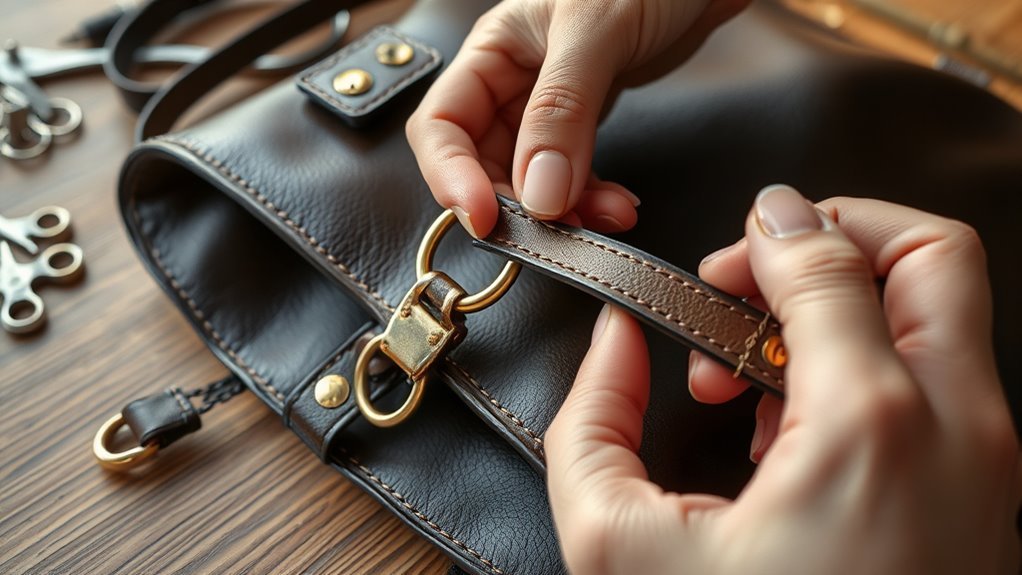
To replace a purse strap, first check how the old one is attached. If it clips on, unclip it and clip on a new strap that fits the rings. If it is looped through a ring and held by a screw, rivet, or stitching, open that fastening, thread the new strap through, and close it again. Before you attach anything, check the rings and the tabs that hold them. A new strap is only as strong as the points it hangs from.
Understanding Different Types of Purse Straps
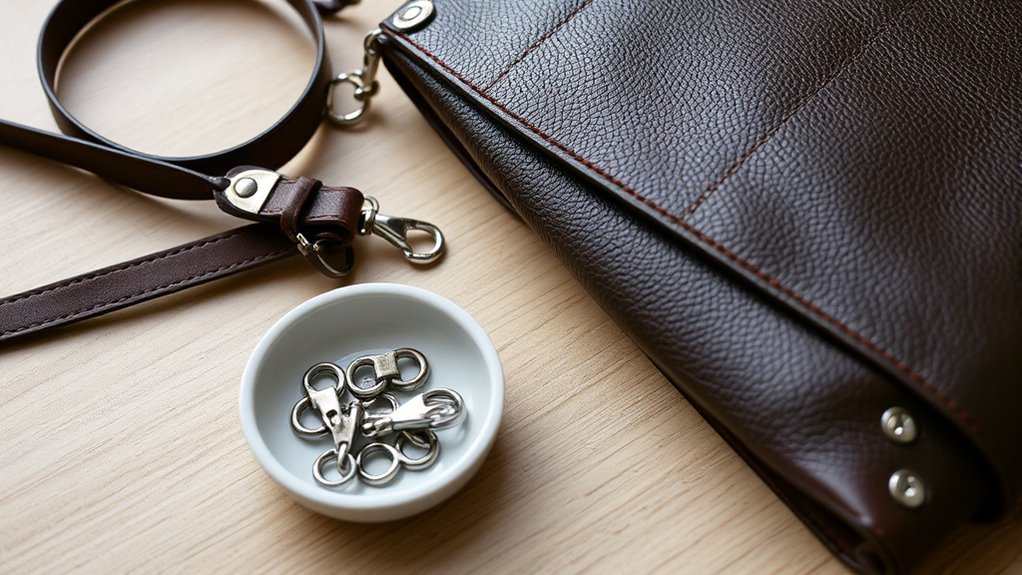
Start with the kind of strap you need. A shoulder strap is shorter and hangs from one shoulder. A crossbody strap is longer, about 45 to 55 inches, and usually adjusts.
Leather straps last longest and suit most leather bags. Webbing and fabric straps are lighter and often wider, which is more comfortable. Chain straps look dressy but dig in when the bag is heavy.
An adjustable strap is the most flexible choice, because you can set the length for your height and your coat.
Straps attach in one of three ways. Most clip onto rings with swivel hooks. Some loop through a ring and are closed with a rivet, a Chicago screw, or stitching. Others are sewn straight into the bag. The first kind takes seconds to replace. The second takes basic tools. The third is usually a job for a repair shop.
Essential Tools for Replacing Purse Straps
For a clip-on strap, you need no tools at all. For other types, a few basic tools cover most jobs.
Gather them before you start, so you are not left with a strap half off.
Essential Tools Overview
Here is what each tool is for.
A measuring tape and a ruler are for sizing the old strap and the hardware. A small screwdriver opens Chicago screws.
For a sewn fastening, you need a seam ripper, a strong needle, and waxed or heavy polyester thread. Do not rely on glue to hold a strap. Glue alone will not carry the weight of a bag.
Pliers open and close chain links and jump rings. Wrap the jaws in tape so they do not scratch the metal.
For rivets, you need end-cutting nippers or a drill to remove the old ones, and a rivet setter and mallet to fit new ones.
Preparation Before Replacement
Before you take anything off, measure the old strap. Lay it flat and measure the full length from end to end, including the clips. Then measure its width.
Next, measure the inside width of the rings on the bag. The new strap or its clips must fit that opening. Note the hardware color too, such as gold, silver, or gunmetal, so the new strap matches.
Take a photo of how the old strap is attached, on both sides. It is an easy guide when you put the new one on.
Then empty the bag and work on a clean, flat surface.
Step-by-Step: Remove Old Purse Straps
Now remove the old strap. How you do it depends on the fastening:
Here’s how to proceed:
- Gather Tools: Have a small screwdriver for screws and nippers or a drill for rivets.
- Remove Rivets: If your strap uses rivets, cut the cap with end nippers or drill it out slowly with a small bit. Protect the bag with tape first.
- Unscrew Hardware: For straps attached with screws, unscrew them completely, and keep the hardware—you might need it for the new strap.
- Inspect Attachment Points: Before you move on, check the attachment points for wear or damage to guarantee a stable fit for your new strap.
Inspecting Purse Strap Attachments for Durability
With the strap off, check the attachment points closely. Look at the leather or fabric tabs that hold the rings. Cracks, stretched holes, or loose stitching mean the tab is failing.
Check the rings themselves. A ring that is bent, has a gap, or has worn thin where the clip rubs should be replaced. Tighten any loose screws. A loose rivet cannot be tightened and needs to be replaced.
Pull firmly on each ring with your fingers. Nothing should shift or creak. Look for rust or green corrosion on the metal, which weakens it and can stain the bag.
If a tab or ring is damaged, fix it before you fit the new strap. A cobbler or bag repair shop can restitch a tab or fit a new ring. Skipping this step is the most common reason a new strap fails.
Selecting the Perfect Purse Strap Replacement
Now choose the replacement. Match it to the bag on these points:
- Material: Opt for leather for durability or fabric for a lightweight feel.
- Strap Length: Measure your existing strap to find a length that suits both your body type and purse size.
- Width: Select a width that complements your bag. Wider straps offer more support, while narrower ones add elegance.
- Customization: Explore colors and embellishments that reflect your personality and improve your purse.
Techniques to Securely Attach Your New Purse Strap
Attach the new strap the same way the old one was attached.
For a clip-on strap, snap each hook onto its ring and check that the gate closes fully. For a looped strap, thread the end through the ring, fold it back, and line up the holes.
Then close the fastening and test it before you load the bag.
Choosing the Right Fastener
If you are fitting a looped strap, you need a fastener to close the loop.
These are the usual options:
- Rivets: These provide a strong, permanent hold, perfect for daily wear and tear.
- Chicago Screws: Ideal for versatility, they allow easy removal and reattachment without damaging leather.
- Decorative Clasps: Add flair while securely holding your strap in place, improving your bag’s overall look.
- Material Match: Always choose fastener materials that complement the strap and purse material for peak performance.
Whichever you use, pull hard on the strap after fitting it. It is better for a weak fastening to fail on your table than on the street.
Ensuring Proper Alignment
Check alignment before you close the last fastening.
Lay the bag flat and run the strap from one ring to the other. It should lie flat along its whole length, with no twist.
Use the existing holes in the strap ends when you can. If you need to punch a new hole, use a leather punch and mark both ends at the same distance from the tip.
On an adjustable strap, make sure the buckle faces outward and the smooth side of the strap faces up.
Put the bag on and check the mirror. It should hang level and at the height you want.
Then fill the bag with your usual things and carry it around the house for a few minutes as a final test.
Creative Customization Ideas for Your Purse Strap
Replacing the strap is also a chance to change the look of the bag.
Here are a few simple ideas:
- Wrap with a Silk Scarf: Add color and texture easily by wrapping your strap with a chic silk scarf or ribbon.
- Incorporate Strap Embellishments: Attach charms or beads to make a statement and show your individuality.
- Try Fabric Painting: Use fabric paint to create custom designs, allowing for complete creative control over your strap’s look.
- Experiment with Materials: Switch things up with leather, chain, or nylon for diverse styles and functionalities.
Keep any decoration light. Charms and wraps should not add strain to the rings.
A wider strap in a contrast color is the easiest change of all.
Best Practices for Care and Maintenance of Your New Purse Strap
A new strap lasts longer with a little care. Wipe it with a soft, slightly damp cloth when it looks dirty, and dry it afterward.
Store the bag in a cool, dry place. Condition leather straps every 3 to 6 months so they stay flexible and do not crack.
Do not overload the bag. Weight is what wears out straps, rings, and tabs.
Every month or two, check that clips close fully and screws are tight. A drop of clear nail polish or thread locker on a Chicago screw keeps it from working loose.
Frequently Asked Questions
How to Fix a Tote Bag Strap?
If the stitching has come loose, pull out the broken thread with a seam ripper and resew through the same holes with heavy polyester thread. Sew a box with an X through it for strength. If the fabric itself has torn, patch it from the inside before you resew.
Do Cobblers Fix Bag Straps?
Yes. Most cobblers and shoe repair shops repair bags too. They can restitch a strap, replace a ring or clip, fit new rivets, or make a new strap to match.
Why Do My Purse Straps Keep Falling Off?
If the strap comes unclipped, the clip gate is worn or too small for the ring, and the clip should be replaced. If a screw keeps coming out, tighten it and add a drop of thread locker. If the tab or ring is tearing away from the bag, it needs a repair before the strap goes back on.
Conclusion
Replacing a purse strap is simple once you know how it attaches. Measure the old strap and the rings, check the tabs and hardware, and fit the new strap the same way the old one came off. Then test it with a firm pull before you trust it with a full bag.