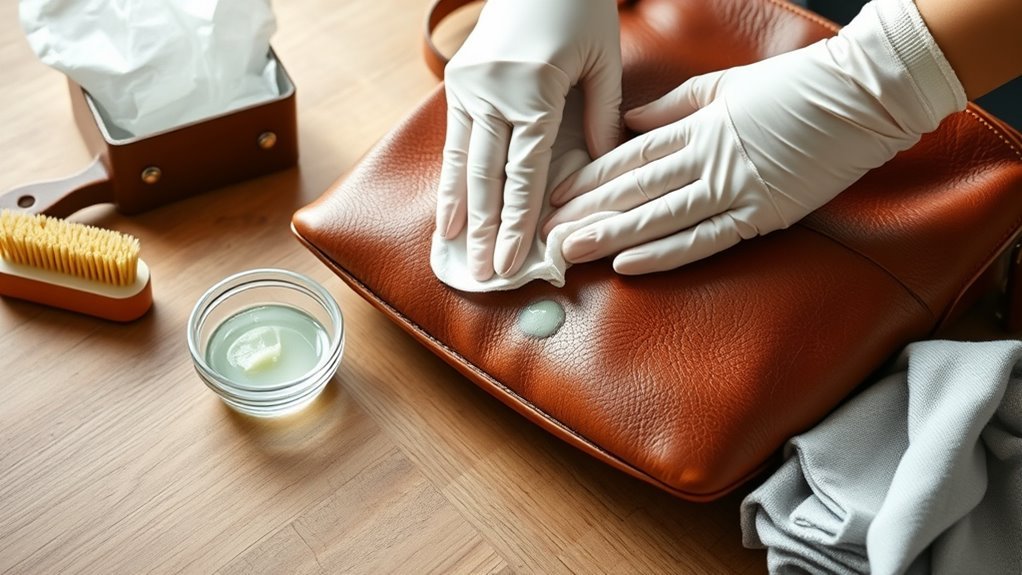
To remove mold from a leather bag safely, work outdoors and wear gloves and a mask. Brush off the loose growth with a soft brush. Then wipe the leather with a cloth dampened in mild soapy water or a leather cleaner, without soaking it. Let the bag air dry fully out of direct sun, then condition it. First, make sure the white film is mold and not harmless wax bloom.
Identifying Mold vs. Wax Bloom on Leather Bags
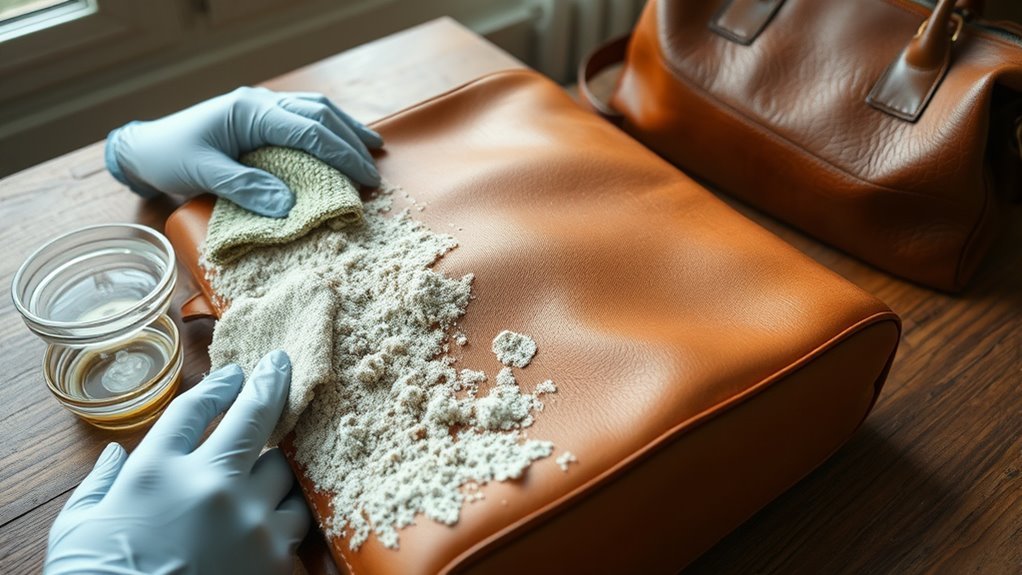
Not every white film on leather is mold. Mold shows up as fuzzy or spotty patches in white, gray, green or black. It usually has a musty smell and grows where the bag has been damp.
Wax bloom, also called spew, is different. It is a thin white haze of fats and waxes that rise to the surface of the leather, often after a change in temperature. It has no musty smell.
Texture is another clue. Mold looks fuzzy or powdery and grows in spots. Bloom feels waxy or slightly greasy. Warm it gently with your hand and it melts back into the leather. Mold does not.
Think about where the bag has been. Mold needs moisture, so it follows damp closets, basements and plastic covers.
Bloom can appear on well-kept leather in a dry room. It only needs buffing with a soft cloth, so do not treat it as mold.
If you are still unsure, treat the film as mold and follow the safety steps below.
Step-by-Step Guide to Safely Remove Mold
Removing mold takes a few simple supplies and a careful order of steps.
Gather a soft brush, several microfiber cloths, mild soap or a leather cleaner, water, disposable gloves and a mask.
Plan to work outdoors on a dry day, so spores do not spread through your home.
Essential Cleaning Supplies
The right supplies protect both you and the leather.
Use a soft-bristled brush or a dry microfiber cloth to lift loose mold. For washing, mix a few drops of mild soap into lukewarm water, or use a cleaner made for leather. Saddle soap also works on smooth leather.
Test your cleaner on a small hidden area first to check that it does not darken or discolor the leather.
You will also need a clean, dry towel and an airy, shaded place where the bag can dry for a day or two.
Have a leather conditioner ready for the final step. Cleaning removes oils along with the mold, and conditioner puts them back.
For your own safety, add disposable gloves and a well-fitted mask, such as an N95. Goggles are sensible if the growth is heavy.
Effective Removal Techniques
Follow the steps in order. Rushing is what spreads spores and damages leather.
Empty the bag completely. Take it outdoors and brush off the visible mold with a soft brush or dry cloth, working away from your face.
Dampen a cloth with your soapy water or leather cleaner and wring it out well. Wipe the affected areas, then the whole panel so it dries evenly. Do not soak the leather. Wipe again with a clean damp cloth to remove the soap.
Dry the bag with a towel and leave it in a shaded, well-ventilated place until it is fully dry. Keep it away from direct sun, heaters and hair dryers, which can crack leather.
When the bag is completely dry, apply leather conditioner. Check the bag again after a week. If spots return, repeat the cleaning or see a specialist.
How to Handle a Moldy Bag Safely
Mold releases spores when it is disturbed, and breathing them in can irritate the nose, throat and lungs. A few precautions keep the job safe.
Work outside, and wear gloves and a mask while you brush and wipe. If you have asthma, a mold allergy or a weak immune system, ask someone else to do the cleaning.
Do not forget the inside. Pull the lining out if you can, wipe it with a cloth dampened in mild soapy water and let it dry fully. Clean or throw away anything that was stored in the bag.
Put used cloths and gloves in a sealed bag and throw them out, or wash the cloths in hot water. Wash the brush and your hands when you finish.
Many guides suggest vinegar or rubbing alcohol for mold on leather. Both can dry and discolor the finish, so they are not our first choice. If you use one, dilute it with water, test it on a hidden spot and condition the leather afterward.
Conditioning Leather After Mold Cleaning
Cleaning mold off leather also strips some of its natural oils. Conditioning puts them back and keeps the leather from drying and cracking.
Wait until the bag is fully dry. Then apply a small amount of conditioner with a soft cloth, using light, even strokes.
Conditioning After Cleaning Mold
Condition the whole bag, not only the cleaned spots, so the color and sheen stay even.
A neutral cream or conditioner suits most smooth leathers. Use thin coats. A heavy layer leaves a film that can hold dust and moisture.
Let the conditioner absorb, then buff off any extra with a clean cloth. After that, condition the bag every 3 to 6 months.
Conditioner does not kill mold or prevent it. Dry storage does that. Conditioning simply keeps the cleaned leather healthy.
Choosing a Leather Conditioner
Pick a conditioner made for your type of leather. Products for smooth finished leather are not suitable for suede or nubuck.
Unfinished and vegetable-tanned leathers absorb more product and darken easily, so use less on them and test first.
Avoid cooking oils and heavy greases. They can turn rancid and may even feed new mold growth.
Always test a new product on a small hidden area first to check for darkening.
Application Techniques for Conditioning
Apply conditioner with a soft cloth in thin, even layers, and work it into seams and folds where leather dries out first. The table below sums up when to condition:
| Conditioning Frequency | Recommended Actions |
|---|---|
| Every 3-6 months | Apply a neutral cream |
| After mold removal | Let it absorb for 15-30 min |
| Before storage | Apply a thin, even coat |
How to Keep Mold Away From Your Leather Bags
Mold needs moisture, so prevention is mostly about dry storage. Keep bags in a cool, dry place with moving air. Aim for a relative humidity of about 40 to 55 percent, and keep it below 60 percent.
Use breathable cotton dust bags, never plastic covers, which trap moisture. Check bags you rarely use every month or two, and air them out.
In humid climates, put silica gel packets inside each bag and replace them when they are spent. A dehumidifier in the closet helps even more.
After rain, dry the bag fully at room temperature before you put it away. Never store a damp bag.
Eliminating Musty Odors From Leather Bags
A musty smell can stay after the visible mold is gone. It usually means the bag or its lining is still slightly damp, or that spores remain inside.
These steps help remove the smell:
- Baking Soda: Place an open box or cloth pouch of baking soda inside the bag for a day or two. Do not sprinkle it on the leather or lining.
- Air Out: Place the bag in a dry, well-ventilated area for 24-48 hours, avoiding direct sunlight to protect the leather’s color.
- Natural Absorbers: Use activated charcoal or cedar inserts to absorb odors and prevent moisture buildup.
If the smell persists after a week of airing, clean the lining again and check the seams and pockets for hidden growth.
Do not cover the smell with perfume or fabric spray. They add moisture and can stain leather.
Frequently Asked Questions
Is Mold on Leather Harmful?
It can be. Mold spores can trigger allergies, asthma and breathing irritation in sensitive people. Clean the bag outdoors with gloves and a mask, and do not carry a moldy bag until it is clean.
Should I Throw Out a Bag With Mold on It?
Not straight away. Light surface mold usually cleans off. Think about discarding the bag if the growth is heavy, has gone deep into the lining or padding, or returns after repeated cleaning.
Can Moldy Leather Be Saved?
Often, yes. Surface mold on smooth leather usually comes off with careful cleaning. Dark stains may remain where it has grown for a long time, and suede is harder to save. A leather specialist can treat serious cases.
Does Vinegar Kill Mold on Leather?
Vinegar can kill some molds, but not reliably all of them, and its acid can dry or dull a leather finish. Mild soap or a leather cleaner is safer for the bag. If you use vinegar, dilute it, test it first and condition afterward.
Conclusion
Mold on a leather bag is common and usually fixable. Confirm that it is mold, work outdoors with gloves and a mask, brush and wipe it away gently, and dry the bag fully before conditioning. Then keep your bags dry, aired and out of plastic so the mold does not return.
Sources: U.S. EPA: Mold.

